
One of the most common questions RVers and cruisers are asked is how much it costs per month to fund a full-time perpetual traveling lifestyle?
The answer is... it depends.
It's highly variable based upon your personal style, travel goals, income, expenses and preferences. So sorry, we can't just give you a number.
But we're happy to share our costs and our thoughts.
Our disclaimer: We selected this lifestyle of mobility in 2006 at the age of 33 (do the math to figure out our current age) to maximize our quality of life, not necessarily to minimize our expenses. We were already debt-free and cash positive when we hit the road. But our expenses HAVE been way less than our prior lifestyles while we've maintained our incomes.
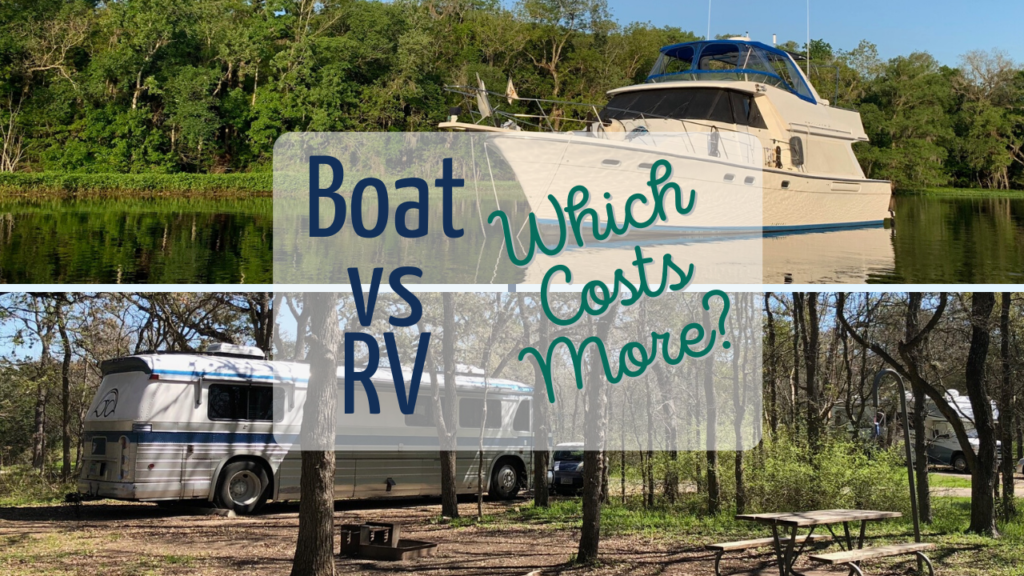
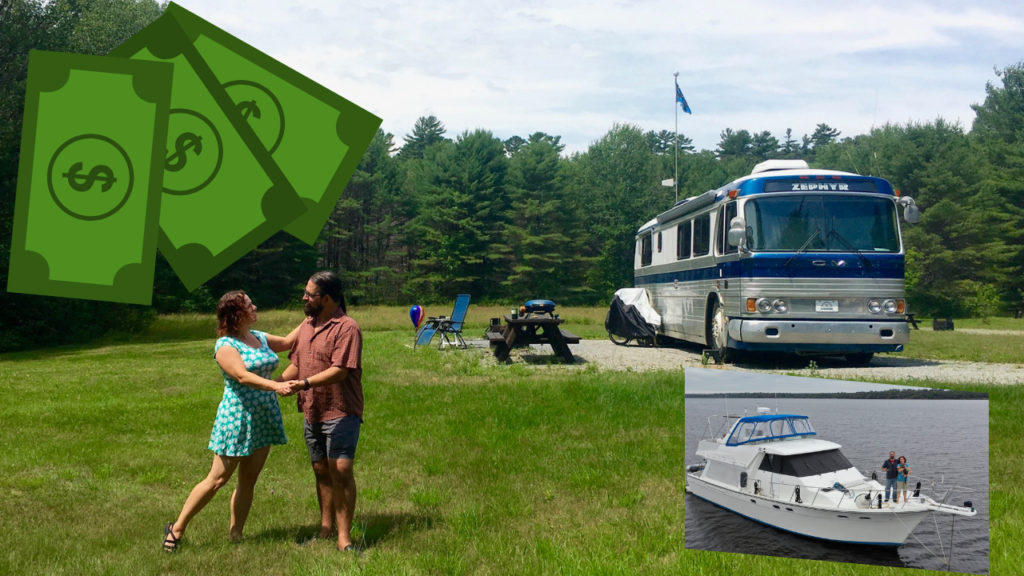
We've mixed up our style of travels over the years and we are currently maintaining THREE nomadic home bases that we split our time between - a 1961 vintage bus, a 1999 motor yacht and a 2020 van conversion. All are paid for - no loans. The combined value of all three is likely less than any moderate home we might purchase if we found a single place we wanted to settle down at.
We are consumer debt free, cash positive and actively manage our investments. Our monthly income varies, and we don't follow a fixed 'budget' - we spend what we decide we want to spend. And we know that's a blessing.
Our philosophy: Life is short, and you can't take it with you. And we have no one to pass it on to.
Please note this is not an accounting of all our monthly costs, just those specific to the daily expenses of a traveling lifestyle (ie. we don't include things like groceries, clothing, entertainment, home remodeling, vacations, business expenses, etc.)
2022 will be the last year we share our expenses publicly... it's just become too tedious to track three different nomadic vessels and present it in a usable way for others. But we'll leave prior years there for history.
Read on below for explanations of each column, and how choices you make in your travel style could impact your costs.
Some will look at our costs and think we're living an indulgent rich & unobtainable lifestyle, and some will look at this and wonder how we get by on so little for such an amazing always changing million-dollar view lifestyle. We're always amazed at the range of reactions we get.
We consider ourselves part of a 'mobile middle class' - not necessarily a minimalist or lifestyle of the rich and famous (hah).
Life is about finding your own happiness quotient.
This is ours.
Others are far more frugal than us and able to live for substantially less, and others live far more extravagantly.
Kinda like any other lifestyle, really. It's all up to you!
Explanations of each column:
Below you'll find lots of content on these topics - here's a recap of what you'll find:
- Variable Costs
- "Rent:
- Camp & Marina Fees
- Fuel
- Transportation
- Storage
- Maintenance
- "Rent:
- Fixed Costs
- Connectivity / Internet
- Vehicle Insurance & Registration
- Health Insurance
- Mail Forwarding
- General Daily Expenses
- Food
- Laundry/Clothing
- Fun Stuff / Entertainment
- Geek Toys
- Savings & Investments
- Links to other Full Timer Costs
Blog Posts About Costs
Browse other posts on this topic:
Variable Travel Costs
"Rent"
Since we don't maintain a fixed home base, we consider our camp/dockage fees plus fuel to move our homes to replace what used to be our rent or mortgage payment. And we love that these are variable costs that we have a lot of control over based on decisions we make about where we stay and how many miles we move.
Camp & Marina Fees
RV Camping Fees
Fees vary by location, amenities and whether we're in a public or private campground. We consider ourselves happy when at the end of the year, our average monthly campground fees are under $400-500/month. But we don't sweat it.
Range of Camping Options
- Boondocking/Free: We enjoy mixing in a lot of boondocking. This might range from awesome places on public lands (BLM, National Forests, etc), staying in lower cost public campgrounds without hook-ups, 'blacktop boondocking' overnight in commercial parking lots or rest stops, to driveway surfing with friends & family (got bus parking? We love invitations!). These low/free cost stays not only bring our average cost down a lot, they're some of our most memorable stays.
- Public campgrounds: State, federal, county, city, etc. parks can range from $5-50/night (some are even free!), but generally have a 14 day limit on them. Amenities can range from dry camping to full hook-ups with electric/water/sewer. We generally love public parks, as they offer larger sites, more privacy, great views and access to active things to do out in nature... we spend a lot of time in them.
- Commercial RV Park & Resorts: These can cost more in $20-90+/night range, and many offer more affordable weekly/monthly rates or have discount programs they belong to. We stay in these when they're the best option for the proximity to where we want to be, or we need access to full hook-ups to beat the weather, or dump/fill tanks.
- RV Co-Op: We also own a lifetime lease to a co-op park in Benson, AZ that serves as both storage for our bus and our winter base. We paid about $27k upfront for the lot with a lovely little casita. Ongoing, we just pay electric and annual park maintenance (about $1500/year - if we don't put our lot in the rental pool).
RV Membership Clubs
We keep memberships in these clubs to help give us discounted and/or free stays at places:
-
- Passport America to save 50% on nightly fees at participating parks - the annual fee pays for itself with just a couple stays. We use this club mostly when we're in-between extended off-grid stays to dump & fill the tanks. (If you join, our member number is R-0242893 .. thanks for using our referral!)
- Escapees RV Club - they have their own network of RV parks, and they offer 15-50% discounts at over 1000 parks nationwide. (If you join, select 'Technomadia' from the referral field.. thanks!)
- Harvest Hosts - gives you access to a database of wineries, vineyards, farms, museums and other unique places that welcome RVers. A fun way to mix it up - but we save in camping fees, usually increases our food & drink budget!)! (Use our affiliate link and save 15% off new membership!)
More Info: Our Guide to RV Clubs
Other Tips for RV Camping Costs:
- Monthly & Weekly Rates: For staying in RV Parks, monthly rates are the best rates followed by weekly, and help balance out shorter stays while we're in transit. Urban locations are typically more expensive - so if we need to be somewhere like San Francisco, Austin, St. Louis, etc. - monthly rates can be $500-1300. Some locations have seasonal rates too, so if we need to be in Florida during the winter (where our family is), it's more expensive. If we don't need to be near an urban area, the lowest we've paid so far is $300/month.
- Volunteering & Workamping: We also haven taken fun volunteer positions from time to time - such as interpretive hosting at a lighthouse in Oregon. We get to do something incredibly fun and give our time for under 20 hours a week, and get a full hook-up site in a gorgeous location. With our full time work commitments however, we rarely have time for the extra hours however. Many campgrounds will accept 'workampers' for a few hours a week in exchange for a site - check Workamper News for more information.
- Reservations & Pre-Paying: One consideration with the variability of camping fees, is that to score great spots during peak season in your desired location - you may find you have to pre-pay for your spot at time of reservation or put up a sizable deposit. So if you're making your winter reservations during the summer - you could end up paying for part of your winter lodging, while still funding your summer lodging. Always be sure to check out the cancellation policy when making reservations in advance - sometimes they're refundable, and sometimes there are fees involved.
Further Related Guides:
Finding Campgrounds & Boondocking
Marina Fees
We mix it up with:
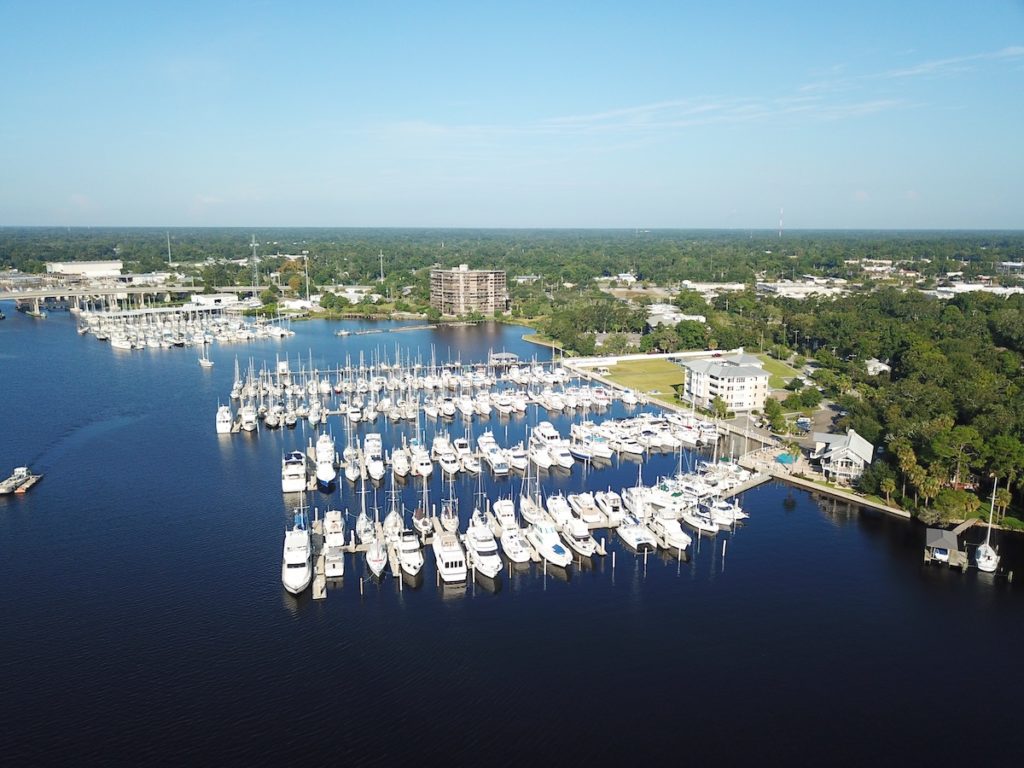
- Monthly Stays - Marinas tend to charge by the foot for monthly stays, ranging from $10 - 30 per foot (we're 47-55' long depending on how a marina measures, so anywhere from $500-1400, plus electric and liveaboard surcharges). Like RV Parks, these are the cheapest marina rates and we LOVE a slow pace of travel spending time in marinas in cool downtowns with lots to do in walking range.
- Nightly/Weekly - Marinas are much more expensive by the night, typically charging $1-4 per foot per night, or $7-12 per foot per week. This comes out to $50-200 per night! We minimize these.
- Anchoring/Mooring - This is the RV equivalent of boondocking, and it's far more abundantly available. There's lists of anchorages on resources like Skipper Bob's, Active Captain and Waterway Guide. Some do charge a permit fee, or mooring balls might have a fee too.
We shared more about costs in this video/article:
How Much Does It Cost to Stay in Marinas?
Fuel & Propane
This is a fluctuating cost - both in the cost of fuel and how many miles we're traveling.
Our bus gets 7 - 7.5 mpg, the fuel is diesel in our 8v71 Detroit Diesel 2-stroke engine. A typical driving day is 50-200 miles at 55-60 mph. In the past, we have covered 5000-7000 miles by road in a year. Now that the bus is a part-time home, we will likely only cover 1-2k miles a year.
Our boat has two diesel Cummins 370 engines, and we get just under 2 miles per gallon or burning 3.2 gallons per hour. A typical 'driving day' is in the 15-40 nautical mile range at 7-8 knots. While our fuel "economy" sucks in comparison to our RV, we perhaps cover 500-1000 miles a year. So thus our fuel costs actually aren't that bad.
Our van gets about 15-17 mpg, and is our daily driver, shuttle craft and camper. We'll likely put a few thousand miles a year on it.
We like to vary up our pace - some months we put lots of miles as we make a major repositioning, and then others we stay pretty still. It all balances out, which is a beauty of this lifestyle.
More info: Pouring Rent Into the Tank: A Perspective on Fuel Costs for Full Time RVers and Boaters
Propane
During our summer 2015 RV renovations, we added back in propane for our hydronics systems (water heating, furnace, engine pre-warming) and our generator. Our van also uses propane for heating, hot water, fridge and stove top. The costs have been relatively minor - maybe a $150/year. Not worth tracking separately.
Transportation
These are our costs for getting around locally.
When we don't have the van readily accessible - we utilize walking, biking, renting cars, Lyft, public transit and borrowed vehicles.
Storage Fees
With the 3 vessels, it's likely at least one is in storage somewhere.
RVs can use storage lots across the country. Long term, we have purchased a lifetime lease at an Escapee's Co-Op park in Arizona that will be our storage option 2020 and beyond. While we're there, we enjoy a fabulous community and our own 'casita' with extended living space. This costs about $1500/year in community fees - or we can elect to store our bus in their storage lot for free, and put our lot in the rental pool to offset a lot of those costs when we're not there.
Storing the boat will be much more expensive depending on local options. It may be a combination of dry storage on land (which will also incur haul-out, blocking and bottom paint costs) or wet storage (pretty much monthly marina costs minus live aboard fees).
Our van is usually with us whether by boat or bus, but sometimes if we're actively cruising we may store it short term until we can go back to retrieve it. Sometimes marinas allow parking for free before/after a stay, sometimes local friends offer parking or we seek out a storage lot.
Maintenance
There is of course also maintenance on all of the vehicles.
The bus, we generally factor in about $1500-2500 per year in routine maintenance (fluid & filter changes, plus general upkeep), plus there is major services (tires every few years, brake job, bushings, etc.) and we keep a lot of cash set aside to handle breakdowns (such as needing a complete engine rebuild in July 2013).
The boat.. well, we're anticipating this to be pretty high in comparison. BOAT does mean Break Out Another Thousand (a misnomer, it actually means Break Out Another TEN Thousand), of course. We've been warned to factor in 10% of the purchase price of the boat to be our annual repair & maintenance (so, we're figuring $15k a year). It's actually worked out to be closer to about $10k per year.
The van is more like maintaining a typical automobile - a few hundred bucks perhaps a year?
We don't include our home renovation, upgrade projects or non-maintenance repairs on our bus or boat however in our cost log above.
For more on upkeeping an renovating an older RV:
- Five Years in a Vintage Bus (including our cost log on maintenance & renovations)
- Is It Worthwhile to Renovate an Old RV? Why Not Just Buy New?
Fixed Travel Costs
These are the costs that we incur every single month and don't vary much, and are tallied up in the 'Fixed Cost' column above.
Connectivity / Internet Access
Our internet and communications cost is essential to our livelihood. If we can't keep online, we can't work - thus we couldn't do any of this stuff.
Our current arsenal includes:
- AT&T Unlimited Plus Business — $150 (We keep two phones and two hotspots on this plan, and then share several lines with family members, which brings our costs way down. Plan retired as of mid-2018)
- Verizon Grandfathered Unlimited Plan — $70 (no throttling or network management apply, 4K video enabled - they are still available, but very risky these days.
- Neither of our plans are available anymore - but we track this stuff for a living. Check out our Current Top Pick Data Plans.
- Calyx Institute Sprint/T-Mobile Plan - Our $500/year membership to this non profit also gives us access to a year of unlimited data on a hotspot.
We actually keep a bunch of other cellular data plans active - but those we consider to be expenses directly related in the pursuit of tracking mobile internet options. The ones above are the ones we would choose to keep if this stuff wasn't our day job.
Total Month: $250
For more information on internet for RVers & Cruisers (our 'day job'):

- Illustrated Tour: Our mobile internet setup
- Guide: Overview of Mobile Internet Options
- Our Book: The Mobile Internet Handbook.
- Our Mobile Internet Resource Center: Where we track industry news, write guides & product reviews and help our premium members navigate this stuff.
- Our Current Top Pick Data Plans for RVers & Cruisers
Insurance & Registration
We have no loans on our vehicles - all our paid for. So the only ongoing expenses is insurance, registration and maintenance.
- Bus/RV: We have a full-timers policy on our bus that is kinda like a combined home-owners and auto policy ($1193/yr), and annual tag fees for our personalized speciality plates ($110/yr). We are registered and insured out of Florida - and we have limited full coverage options for a restored vintage bus conversion
- Van: We also keep a full-timers full coverage insurance policy ($800) and personalized speciality tag fees ($72).
- Our RV insurance agent is Epic-Insurance - Gina is awesome, give her a call!
- Boats: Our full coverage boat policy costs us $2103/year and covers both the motoryacht and dinghy. Our annual Florida registration is about $150, plus $26 for Coast Guard Documentation (we prepaid 5 years).
- We found our policy through the Marine Trawlers Owners Association's recommended insurance agent, who has worked out special provisions for MTOA members.
Total monthly : $370
Health Insurance
We have been insured with an Florida based EPO plan with BlueCross BlueShield (Florida Blue) that give us national access to their BlueSelect network. Since we don't claim subsidies at our income level, we have gone direct instead of through the marketplace starting in 2020. We went with a Silver HSA plan with a $8500/year family deductible / max. But includes preventative care at no cost.
Florida Blue plans starting in 2020 now included access to Teledoc for telemedicine - which is fabulous!
We love telemedicine and highly recommend RVers & coastal cruisers consider it, and have used it for routine ear aches, respiratory infections, etc. Click in their app, a doctor pops up in video chat and a few minutes later a prescription is waiting around the corner. Sure beats trying to find an urgent care center in a new town! If your plan doesn't include it, it can be purchased separately on RVer Insurance.
For more information:
- Guide: Healthcare and Health Insurance for RVers
- For information on RVer compatible insurance options, we recommend RVer Insurance.
2022 premiums: $1039/mo
Mail Forwarding & Domicile
We use St. Brendan's Isle in Florida for our mail forwarding, and use their Mail Scan Pro service. Their address also serves as our legal address of domicile for driver's licenses, voting, vehicle registration, business registration, taxes, etc. They collect our mail, scan the front of the envelop and notify us via e-mail that we have new mail. We can then view our envelops online and decide what to do with them - scan, send or shred. We can request a shipment to whatever address we're at. They're super cool and we couldn't be happier with the service we have received from them.
We 'moved' to Florida before the Escapees had an option, but if we were starting off new - we'd also consider them. Their county tends to have cheaper insurance options.
For more information:
- Guide: Mail, Domicile, Registering Vehicles and Voting as a Full Time RVer
- Guide: Moving our Domicile to Florida
Monthly Cost: $22/mo, plus postage & scanning charges
Non-Travel Specific Living Expenses
All of the below stuff we've not included in the above cost log - as these are expenses we'd have regardless if we were traveling or living in a stationary home. But we will discuss some things that influence these costs with a traveling lifestyle.
Day to Day costs
These are the normal things ... like food, clothing, laundry, etc.
Food
Obviously, food is a point where budgets can vary widely by personal dietary preferences... but you'll probably spend similarly to what you spend now, maybe a touch more. The biggest change is you may not have room to store bulk buys - so that could account for some increase. And you may be tempted to eat out a bit more while you're traveling, mostly to sample local cuisines but sometimes just because it's easier after a long day of driving, or cooking in a small space may be seem limiting.
If we're staying in a 'foodie' area, our expenses go up as we love eating local. If we're staying somewhere with limited dining out options, we tend to cook in more. We tend to lean towards organics, whole foods and are primarily vegetarian and gluten free at home. We enjoy wine, craft brews and local cuisine.
We know of folks who thrive on a few hundred a month for a food budget.. but that's definitely not us. It's not uncommon for our dining out and grocery bill to be near a grand a month.
Food is part of our social life, and brings us joy and good health.
Guide: Food Restrictions and Full Time RVing
Laundry & Clothing
Laundry is another consideration. We opted not to make room for a washer/dryer in our bus, there's no room in the van and have a washer/dryer combo in the boat.
When RVing, we use mainly public coin laundry facilities. It's nice to get 2-3 weeks of laundry done in under an hour, and many campgrounds/marinas have laundry facilities on site. The cost of a load of laundry can vary widely by location and facilities. We've had them cost everything from free in Louisiana State Parks (seriously!) to up to $5-6. Average is probably around $2.50-3.50 a load. On a monthly basis, we maybe spend $20 on laundry - its not worth micromanaging.
But we do consider quarters to be like gold, and make sure we always have plenty. Nothing like having no clean undies left, arriving to a campground after the office is closed and not enough quarters to get a load done.
Clothing is something to consider as well. You'll likely have less space to store a huge wardrobe, but you will also likely be exposed to more climates and variety of venues - thus requiring a well balanced selection. We tend to do a lot of thrift shopping for our clothing, this helps us affordably adapt to local weather & venues. But we're also not afraid to spend good money for quality staples in our wardrobe.
Guide: Tips and Tricks for a Versatile RVing Wardrobe
Fun Stuff
When you're traveling, you're going to be exposed to new things - from local foods to attractions to festivals/rallies/events. You're probably going to want to explore them, which will add to your spending. We recommend keeping a 'fun stuff' line item in your budget so you can fully embrace what you find out on the road.
After all, enjoying the places we visit is what being on the road is about for us.
We enjoy going to events, conferences, rallies, concerts, hot springs, community theatre, musicals, local events (roller derby, festivals, rodeos, etc.) and just embracing what is around us. We like to find at least one 'touristy' thing to do in the areas we visit, and we soak up new experiences.
These were all things we did before we hit the road. But the costs are different now - as we're frequently finding out about events fairly last minute and sometimes paying late entry rates and sometimes able to pay less for a last minute ticket to an unsold out event. And, sometimes we end up needing to forfeit event fees that we had to sign up for in advance, but routing plans changing to make it unrealistic to attend. Be sure to know the ticket transfer/re-sell policy before you buy.
Of course, we also enjoy non-RV adventures and tend to take cruises, fly 'home' to family, rent cottages, take cross country train trips and more.
Also keep in mind that you may find that in order to attend events, special occasions of loved ones or emergency situations - other methods of travel than your RV or boat may make more sense. So you may need to keep a travel budget for airplanes, hotels, fuel for your vehicle, trains, etc. You know, just like when you lived stationary.
Geek Toys
We also don't list our other major expense: Tech!
You can probably get a good idea that we spend a lot in this realm.
Since our business is cutting edge technology, this is pretty essential stuff to our livelyhood and keeping up to date is what allows us to be mobile. We upgrade our tech early and often. Our computers are rarely more than 3 years old and we usually have the latest iGadgets released (we are app developers and need to test on the latest and greatest after all).
Saving for the future, investing and giving
We are actively saving and investing for the future.
We have retirement funds & investments we manage and contribute towards. We have emergency funds and savings at the ready too.
A lot of our income goes into a discretionary spending account for adventures, upgrades and fun.
We also are pretty quick to invest in others - supporting innovation, donating to causes we believe in, etc.
Between maintaining our previous income levels, being debt free and having containment on living costs - it doesn't have to take much to live a very sustainable, exciting and full time traveling lifestyle.
And all does come down to choices.
Other Full Timer Costs
Here are some links to other full timers who have shared their expenses so that you can get a range of what it might cost:
- RV-Dreams Financial Center - Howard and Linda have shared their budget and expenses for many years, and also offer some sample budgets and worksheets to help you track your expenses.
- Tiny House Blog - Andrew Odom shares a snapshot at one month's full timing expenses for his family of 3.
- Interstellar Orchard - Solo female RVers Becky Schade shares what her annual expenses are, which comes out to about $1300/month.
- Live. Work. Dream - Jim & Rene share their winter 2014/2015 full time RVing expenses, with links to lots of past articles on the topic.
- WheelingIt - Nina Fussing shares their full timing costs back in 2011.
- Road Less Traveled - Emily & Mark Fagan share their full timing costs, comparatively over their many years on the road.
- Gone with the Wynns - Nikki & Jason Wynn share their costs of full time RVing on a quarterly basis.
- CheapRVLiving - Bob Wells hosts this entire blog/forum/website about living frugally on the road. He shows ways to live for as little as $500/month.
- RVSueandCrew - Solo traveler Sue shares her monthly & fixed expenses regularly on her blog. She lives entirely off her social security and Amazon affiliate sales.
- Hourly America - Heath and Alyssa share their expenses after traveling to 48 states in under a year as part of their project of getting hourly jobs in each state.
- We're The Russos - Joe & Kait hit the road in late 2015, and are sharing their monthly income & expenses.
- Five in a 5th - This family of 5 shares their monthly average cost of full time RVing after a year on the road.
- RVLove - Julie & Marc shared their RVing costs for a year on the road in a fun infographic.
Really appreciate you sharing the budget. It can be highly variable, but seeing the details helps verify how it could be. Sure people do it on $20k or $50k or $100k but by sharing examples everyone can see how closely it might align to their lifestyle. Keep up the good work.
Thanks so much for sharing this info! It is really helpful in helping me decide upon a nomadic lifestyle. I appreciate your open-ness to share financial details, and I love how you stated “Others are far more frugal than us and able to live for substantially less, and others live far more extravagantly.Kinda like any other lifestyle, really. It’s all up to you!” Absolutely – cheers for living your dreams!
Enjoying your March 2013 chat, a lot of basic info.’ good stuff, thanks for sharing.
Thanks so much for your site, we’ve recently returned to the nomad life & although it was primarily to enable us to be together as Hubs works from place to place in the construction industry, we’re looking at taking a few months to roam. Your site has helped Hubs clarify that’s it’s do-able (the tech area was very important to him!) and affordable. We’ve both learned a lot ~ Glad you enjoyed Oregon (we drove right past your work camping job when you were there, but hadn’t found your website yet) ~ Best ~ Heather & Bryant
C&C,
I didn’t consider the maneuvering aspect. I was thinking along the lines of a small trailer that could house a Mini with enough room to get out of the door and not the sunroof when it was parked inside. The extra storage I would want would be be for long skinny stuff like poles and lighting stands that could be bracketed to the ceiling or along the inside walls of the trailer. Other storage could be fashioned over the hood of the Toad.
I may start off with a class C to try things out which will leave me enough length margin to haul a trailer. It’s just me and I’m fine with sleeping in the loft rather than having a traditional bed at ground level. I don’t think the cat will care one way or the other. I find her sleeping in the strangest places. That should give me ample space for a shower that isn’t coffin sized and a place to put the computer.
-Ken
C&C, do you have any information on towing vs. trailering a city car? The Mini sounds like a perfect vehicle and would fit in a fairly small trailer. This reason I ask is that I might need space for extra photography equipment that might not fit in the RV easily. I know that using a trailer adds extra weight, but perhaps it will lower maintenance costs on the tow vehicle and could have better aerodynamics. My other thought is that the trailer allows for buying some food stuff in bulk to save money and it’s a place to store out of season clothing yet still have access to it.
Hi Ken.. we do know some folks trailering their car. It works out great for them, and provides a great amount of extra storage space and a mobile garage for them (he does a lot of bike repair on the road). The biggest difficulty for them seems to be finding campgrounds that can accommodate everything. A lot of campsites simply aren’t large enough to park the RV, the car and the trailer. For instance they wanted to come be our neighbors as they were passing through town a couple months ago, and not a single RV Park nearby could accommodate them. And parking lots are a little more cumbersome to maneuver.
Everything is a trade off of some sort 🙂
Adding on to what Cherie said…
There have been times that I have had “garage envy” of our friends who tow a box trailer behind their RV, but a flat-towed car like our Mini Cooper can be detached in just a minute if we need to get in someplace tight, or we have a tricky turn.
With a big trailer, there are a lot of places you are best not even trying to go near.
At the moment, we prefer the flexibility that having a 35′ long motorhome gives u. 🙂
– Chris
Hi, I discovered your web site recently and find it quite interesting… specially the Video Tales from Nomads. I listen to them all…
I’ve been living this life for 3 yrs (2002 – 2005) in a 35 footer Newmar Class A… visiting the US, hopping on a monthly basis. I went back to work since and I’m now a new retiree since January 2013.
I’m planning to go back to full time RVing next fall, but in a smaller and less expensive Class C no more than 25′ and a scooter to move around and exploring.
I needed to be comforted in my decision to go nomad again and reading your blog as been really helpful… Thanks.
We will be meeting someday… I promise you.
Serge Lacombe,
Montreal QC Canada
Nice review of fixed and variable costs for living on the road. Your overall monthly average matches ours, we’re the same on HSA plus major medical coverage, I think we’re lower on food and for sure on connectivity. We quit working five years ago and can be more cavalier about internet + phone connections.
Interesting your food costs were so much lower on your WI to FL repositioning back in August. I would have expected the opposite.
You are wonderfully inclusive addressing different full-timers’ approaches, as in spending. We know some who spend $9k monthly — at first we were incredulous before becoming accepting. They can afford it and want to do it. It’s their style.
We like your style.
Jim
Ahh.. I think I can explain the reduced food costs for August. We attended two bus rallies in that time period, in which food was supplied as part of the rally fee. That accounts for almost a week of our food expenses right there. 🙂
And indeed, just as in any lifestyle – RVing can be done on such a variety of budgets.
How is it you are spending 1/2 of what we are? One big quesiton is how are you spending so little on food. Any tips?
Hi Nikki – Keep in mind, our cost log doesn’t include things like electronics, events/festivals or clothing. So that’s a lot of the difference between what you guys reported… we just don’t consider that stuff to be relevant to reporting an RVing cost lost (everyone will have those, and they’ll be different by style.)
For food, I actually thought ours were about the same. You reported an average of $752/month in your log, correct?
Overall, I found your expenses to be rather in line with what we’ve found over the years for our style of living on the road.
Chris you said that you pay for commercial tags in SD can you nit retitled the bus to motor home and save. Getting reading to buy a MCI 9 or a 5A already converter thought it will need a make over in side to my liking but both of these have a motor home title and for me in NJ that’s only 78.00 a yrs and Bluesky Ins of 445.00. Any thoughts?
Joey
Hi Joey –
I’m not sure where Chris (or I) said our bus is titled commercially. It is already titled as a motorhome, and tagged & insured as such.
– Cherie
Hello! I love what you’re doing and plan to visit this site often. I’m just starting to consider a nomad life and would definitely qualify as a “techno-nomad” (I earn money through writing and editing – my site is verbatimeditorial.com).
Keep up the good work. 🙂
I’m a single woman of 54 and want to travel and live in an RV. I did it before with my husband but now we are not together. I like quiet and natural settings. Am I crazy to do this alone? Thanks for what you do. I look forward to interacting with you.
Sheila
Nope.. you’re not crazy at all. Lots of solo RVers out there! Check out our links for examples of several.
Am a solo fulltiming for the last 20 yrs. Look into joining Escapees RV Club for $60/yr. Join single travelers there or stay at their network of rv parks. Or try workkamping for a free place to stay in your choice of destination in exchange for about 20 hrs work a week. (Workamper News.com) Lots of possibilities for a great travel life.
Thanks so much for sharing all of this fantastic information! I met you on the nomadic FB pages and really appreciate the information. This information is extremely helpful.