
Your closets are overflowing. Bookshelves disorganized. Cabinets of chaos. You can’t see the top of your desk. You just simply have too much stuff. And most of it going unused.

Whether you’re tired of the clutter, doing seasonal decluttering, wanting to make over your wardrobe or preparing your life for full mobility – purging is both freeing and … scary. I’ve discovered that I have a knack for it, and enjoy coaching people through the process. When I decided to scale down from a 1600 sq ft house and move into a shared 80 sq ft of mobile space, I had to get ultra efficient at purging my stuff. I actually started a small side hobby business called Purge Genie that targets guiding people through this very task – and I’ve been putting the systems I found for myself to the test with others as I travel.
I find that most people get stuck when approaching purging. There is fear that you might one day need that ‘thing’, emotional attachments tied up with mementos, a societal training to be attached to acquire and collect stuff, misplaced value on stuff we may have spent a lot of money or resources on – and the pure exhaustion that comes from approaching the task.
The first stumbling block is to recognize that purging is not a chore – but rather a mindset shift from seeing possessions as attachments to seeing stuff as baggage. If you can make that shift, the rest can be a fun game!

My trick to approaching purging is to set up a process that avoids overwhelm. Don’t try to think of your entire house as a singular project to get done. Instead, focus on one area at a time by dividing up the purge process into sessions.
And then, follow these steps to begin your session:
1) Pick an Area! Pick just one area – perhaps a closet, a dresser, a drawer, a cabinet, a hutch, a filing cabinet, etc. Set an attainable goal to purge a certain percentage this session (such as 20 to 40% – knowing you can do future sessions.).
2) Divide and Conquer! Divide things into three piles (mental or physical):
a) Stuff you see as essential must-keeps
b) Stuff you regularly use and see as part of your normal rotation of use
c) Stuff you rarely use, touch or appreciate (this pile should be much bigger than the others – if it’s not, you haven’t made the mental shift yet.)
3) Further Divisions! Put your essential pile to the side for now, focusing on your rarely used and regularly used piles. While keeping them separate, sub-divide things up into logical categories (using clothing as an example: pants, sweaters, ties, t-shirts, long sleeve shirts, etc. or work clothes, lounge clothes, exercise clothes, dress up clothes, etc.)
4) Rotational Purge. Start going through each of your rarely used piles in rotation with a goal to purge a certain number of items from each pile. If you’re unsure if you should purge or keep an item, ask yourself these questions:
-
- Does this item serve a firm unique purpose in my life that can’t be met by another item I am keeping?
- Do I find myself not using this item as often as I should because it doesn’t exactly meet my criteria? (continuing the clothing example – I don’t have anything to wear with this color, the fabric more worn than I like, the fabric isn’t comfy, the fit isn’t perfect..etc.)
- Does this item bring me joy and delight?
In this process, you may find some things you not only don’t want to purge, but want to move to the must-keep pile. After you’ve completed going through all your piles once, take a deep breath and congratulate yourself!
5) Switch the focus. Do a few more rounds on the rarely used piles each time increasing the number of items you purge. Then repeat the above steps with less aggressiveness on your regular use stuff (ie. instead of purging 4 items each round, may be you only purge 2). Or if your goal is bring more variety into your life, such as a wardrobe, perhaps you’re feeling more inclined to weed out the stuff you regularly grab for.
6) Combine. Switch back and forth from your regular and rarely used piles until it feels you’ve achieved your initial goal. Combine the piles to get a sense of what you’re actually down to. Purge more as desired.
7) Reassess Essentials. Not turn your attention to the pile of stuff you initially deemed essential. In all likely hood, some of them no longer will seem as essential now that you’re in full on purge mode. Don’t be afraid to purge from this pile now.
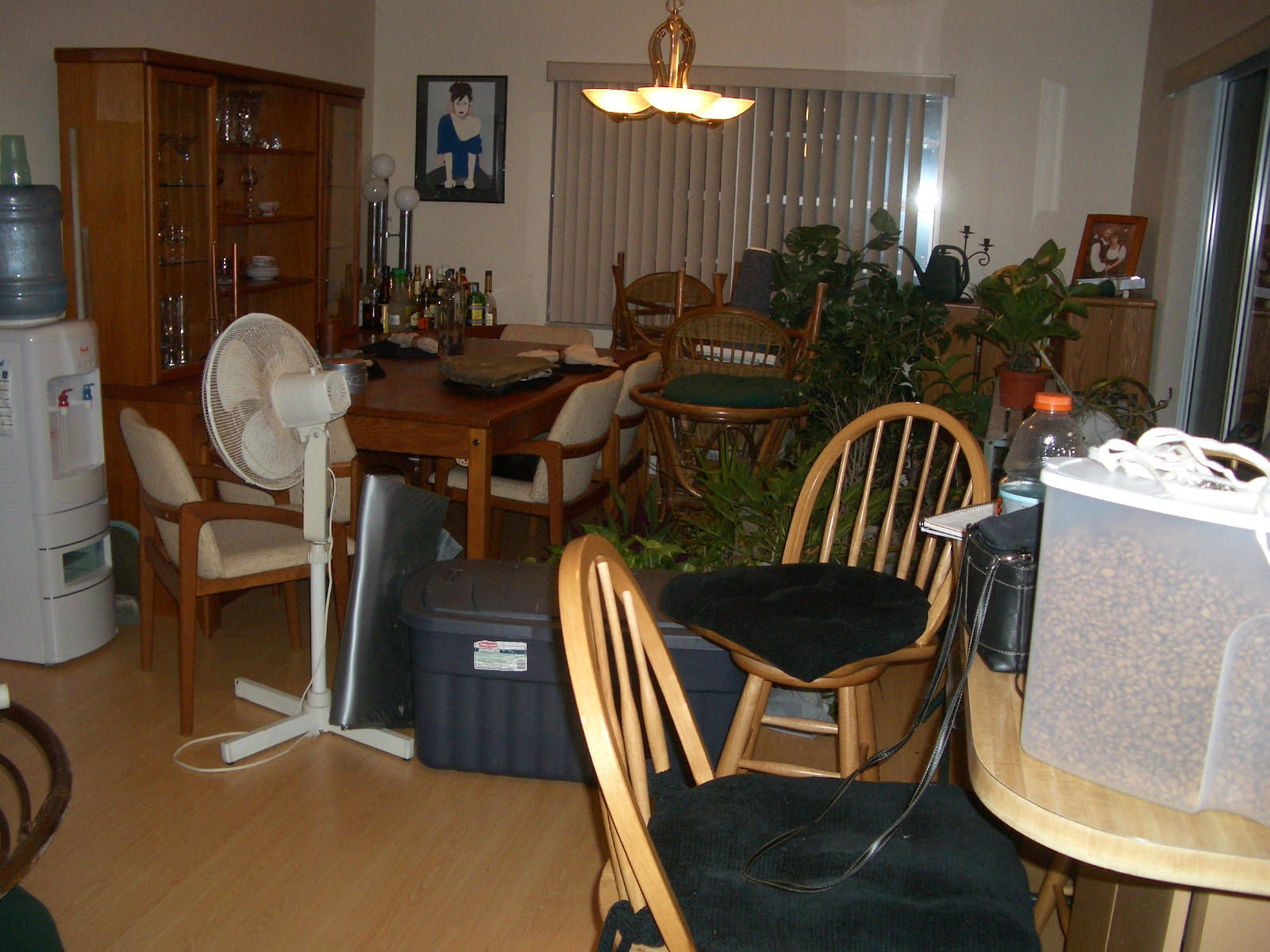 Generally at this point, purging has become a virus and you’re on a role shedding like crazy. Most folks I coach can’t help but double their purge goal for the session and keep going. It becomes an addictive game with each item you shed rewarding you with a sense of freedom. You’ve successfully avoided initial overwhelm by starting with simple easy to reach goals that aren’t as scary as ‘get rid of a lot!’ With each round, the brain adjusts, and it becomes easier and easier to want to get rid of things. You get used to making quick judgements of ‘will I ever really use this??’ ‘is it worth the space??’ ‘does it serve its function?’ ‘is it bringing joy and delight to my life?’ .. and you get yourself down to a streamlined grouping of stuff you actually love and use.
The next step is of course, what do you do with all this purged stuff? I have some tips in my ‘Answers to Common Excuses’ series.

I love reading stuff by Dave of the 100 Things Challenge. Aguynameddave.com and search on Facebook for 100 thing challenge. He really changed my life and continues to write great stuff on this subject. He has a big following now, too.
Just popping back in. Cherie, I’ve revisited this post (and the comments!) as a source of inspiration, for lack of a better word, to attack my own stuff. It really does help you get “unstuck”. Thanks!
I’ve been exploring the idea of livin’ large thru livin’ small for a while. Tough to do when your parents have recently moved to a different city and guilted you into becoming the “curator” of family heirlooms and such. Older generations put a lot of emotional emphasis on leaving a legacy of “stuff”, and that can be difficult to navigate. Digital media, inexpensive picture books made from digital layouts, and the gesture of putting an APB out to family members to claim certain things is a great way to ease the pressure of giving up stuff that has sentimental value but little use. If it has monetary value, well, you don’t have to give new meaning to “Antiques Roadshow”. Find a museum that will allow you to put the items on extended loan, take the advice stated in an earlier comment and “loan” it to a friend or family member, sell it and put the money in a family trust or donate proceeds in family name to a favorite family charity.
Also, if you have your house up for sale, having small cards on certain furniture pieces–a description and a price, or “make an offer”–can help you sell stuff to home previewers or even the potential buyer, especially if the item is a good fit for the architecture (tho you do want to have your home “staged” with minimal stuff).
I found your blog today through Christine. I already have spent hours reading over it! We are getting ready to take our family of 7 on the road indefinitely and have so many questions and concerns. Your blog has helped to answer some of them. Thank you!
.-= Cathy´s last blog ..Vegan Fajitas =-.
Thank you for stopping by, Cathy! If you have any other questions we can help with, please don’t hesitate to ask.
I recently (a month ago) moved to India with one 30L backpack. I used to own three houses (investment properties), two cars, and more stuff than I could ever remember long enough to make a list.
Getting rid of all that stuff and simplifying my life has been the best thing I’ve ever done!
Realizing that we need very, very little to actually survive and taking an honest account of the things we actually use on a day-to-day basis, it becomes very apparent that we often own much, much more than we need.
It’s absolutely a mindset, an abundance mindset. If you believe — if you KNOW that you already have everything you need, you won’t feel like you’re missing anything.
I now see “stuff” as things that soak up freedom. The more “stuff” you have, the less freedom you have (be it financial freedom, travel freedom, or mental freedom).
I arrived here through your recent comment on Sid Savara’s blog about Organizing your Life and Getting Rid of Clutter. This isn’t my first time here, but my first time commenting (I think).
.-= Raam Dev´s last blog ..My First $100 in India and a Message of Thanks =-.
Hi Raam.. thank so much for stopping by and commenting!
I love your statement about the abundance mindset, that’s so absolutely true. As with many things in life. When you live from a place of abundance, you just think differently – and realize that when you need something, there will be a way. A scarcity mindset keeps you always hoarding for ‘just in case’.
And when you’re carrying your home with you (whether on your back, or behind your vehicle), ‘stuff’ physically weighs you down too. Everything we bring into our home is carefully considered.
Here is another idea for things that are too valuable psychologically like an old t-shirt from graduation: Take a picture of it and throw it away. This way you can still look at it and get your memories back. And it only weighs some kBytes on your backuped hard drive.
Absolutely! I did exactly that when I purged a lot of my old touristy knick-knacks, and even some of my favorite old tech gear.
When I was about to set off to my travels I went through the following procedure:
– consider everything not being owned any more
– for each item consider how much I would pay to now have it
– set a threshold (5 EUR worked for me at the time)
Cheers,
Joerg
I am in this process as I plan to hit the road. I struggle most with larger (expensive-ish) furniture items that would have to be immediately replaced (and hard for me to afford) if I went back to sticks and bricks. (Queen mattreses, sofa, dining table, etc.)
I guess I just need to do the math on the storage fees to see if it is worth paying to store or if I make up the difference…
Great post!
Take care,
Jennifer
Totally understand that concern. My first year on the road with Chris, I considered it a trial phase. While I purged a lot of stuff (clothes, books, knick-knacks, old files, etc) – I didn’t actually sell my house and furniture until I knew that going on the road was going to be a long term thing – and that if I ever did settle down somewhere, I’d be a much different person who would have a different style anyway.
Jennifer — Another option is to give some of your stuff to various friends on “indefinite loan”.
I did this with some furniture, and particularly with some of my favorite art objects.
It feels great knowing that some of my favorite items are being used, viewed, loved, and appreciated rather than sitting gathering dust in an expensive storage unit.
I went through this two years ago and I have found that I not only feel “freer” but that I also consume much less now. This gives me more money to spend on experiences, i.e. travel!
Great post! I love purging my stuff on a regular basis. We did a big purge before we got on the road. Since we were renting part of our house out while we are gone we had to get rid of a lot of stuff. Now we’ve been each living from one suitcase for 6 months and believe it or not, I’m going to purge from that stuff before our return! Need to make room for bringing home some gifts to friends and family and I don’t want to pay extra luggage fees. One rule of thumb I learned way back was the “5 second rule”. When going through stuff I give myself 5 seconds to decide if I’m keeping or purging each item. It helps me not get lost in that whole mental, “what if I need it….” cycle.
.-= Carmen´s last blog ..Be a SMART ASS and Design Your Best Life! =-.
Oh heck yeah, people will pay for it. I’D pay for it, and I’m not exactly rolling in dough, being about to start my own consulting biz…in preparation for a more mobile lifestyle!
There are software programs (http://turbotax.intuit.com/personal-taxes/itsdeductible/index.jsp) used by professional organizers who will take a percentage of the deduction, as well as an hourly fee–or a combination of both weighted according to the project.
Many people are downsizing their lives, in many ways, due to the economy’s impact on our culture. Also, think of all the Boomers who are retiring and moving into smaller homes (or hitting the road in RVs!)
Give it a shot. You can promote yourself on places like Craigslist when you plan to hit a city, perhaps?
I have a friend who hired a “professional organizer” to come into their home and go through their stuff, room by room. She charged them by the hour, brought storage containers and did pretty much the same process you described. She even brought special hangers for the clothes in their closets! She made them put things in three categories: a. use or wear frequently and therefore keep; b. recycle; c. garbage. She then packed up the recycling stuff and the throw away stuff and removed it from their premises immediately. She had places (charities, etc.) lined up to use the cast off items. She charged a considerable fee, but they really felt great when the process was completed. Perhaps you could arrange your travels to go and help people with the purging process and make some good money!!!
.-= Barb´s last blog ..New Dutch Oven =-.
That’s awesome.. and part of my intention behind setting up Purge Genie. Never could find a way to make it worth the while financially tho, as I was trying to fund it by taking a cut of selling the discarded items. Turned out to be a lot of linger working and in the end, not worth it. I hadn’t thought of just charging an hourly fee for it, as I didn’t think anyone would actually pay for that.