
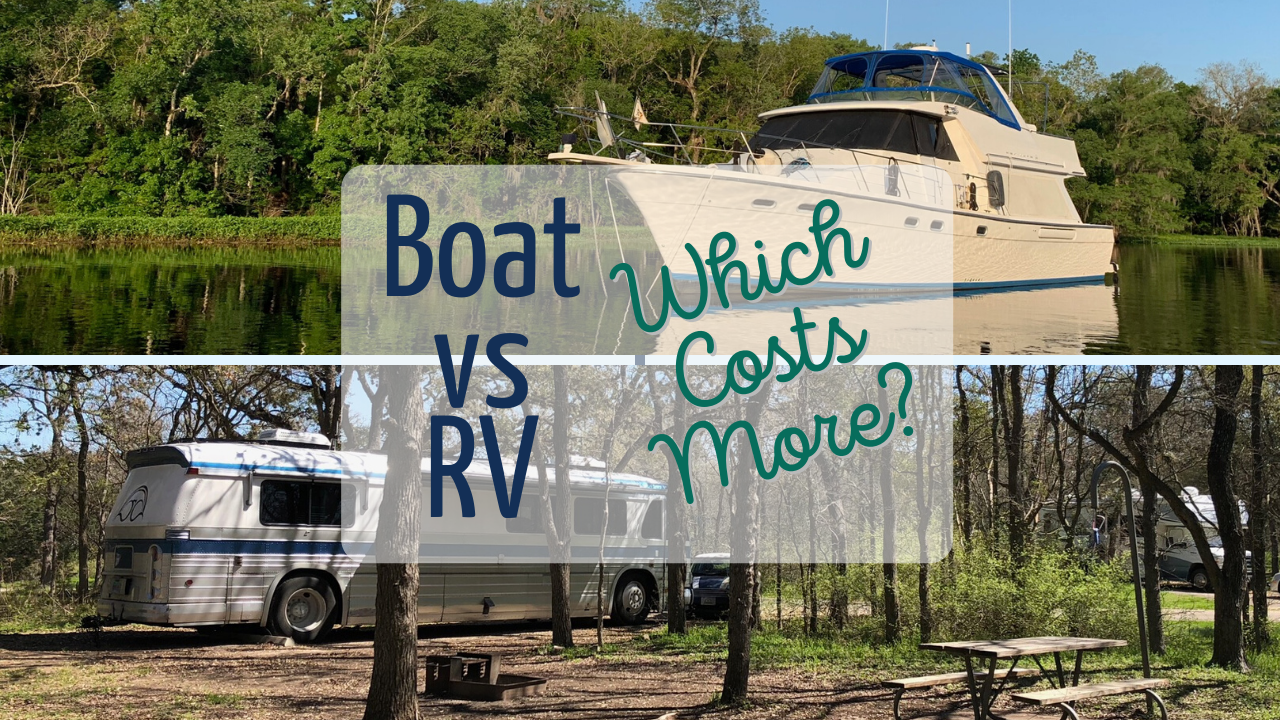
Ever since we purchased our motor yacht to start exploring the Great Loop after over a decade of full time RVing – we’ve been asked the question “which costs more?” multiple times.
Now that we’ve had our boat for three years (3 years?!?!), we have enough numbers to do a proper comparison of the typical travel & operating costs.
And spoiler alert.. it should come as no surprise to anyone, the boat costs more.
But the more detailed analysis of the costs is very interesting to dig deeper into.
First, our video explaining things (19m):
We’re going to break this down in to four primary cost categories:
- Fuel
- Dock/Camp Fees
- Insurance
- Maintenance
But First.. Our Contestants
It’s important to note that trying to compare our boat life to our RV life is like comparing apples to some other fruit of your choice.
Or heck, apples to screwdrivers (wait, isn’t that a squished orange with vodka?).
They’re just so different – not just in the costs, but in how we approach each lifestyle.
The two vessels we’re comparing:
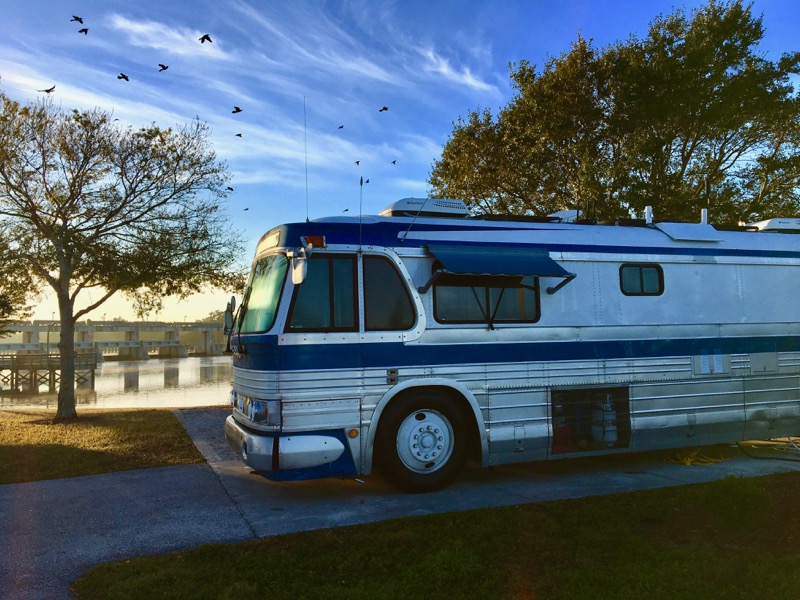
The RV we’re comparing is our 1961 GM 4106 vintage bus conversion that we acquired in 2011 for just $8000. Zephyr came to us already about 15 years behind on general maintenance, and had been sitting in a storage yard mostly abandoned before we found her.
She’s 35′ long, 8′ wide and 24k lbs. A single bedroom and bathroom, kitchen & office combined, and living room with couch & chair.
She’s far from being a typical modern day motorhome to maintain or operate.
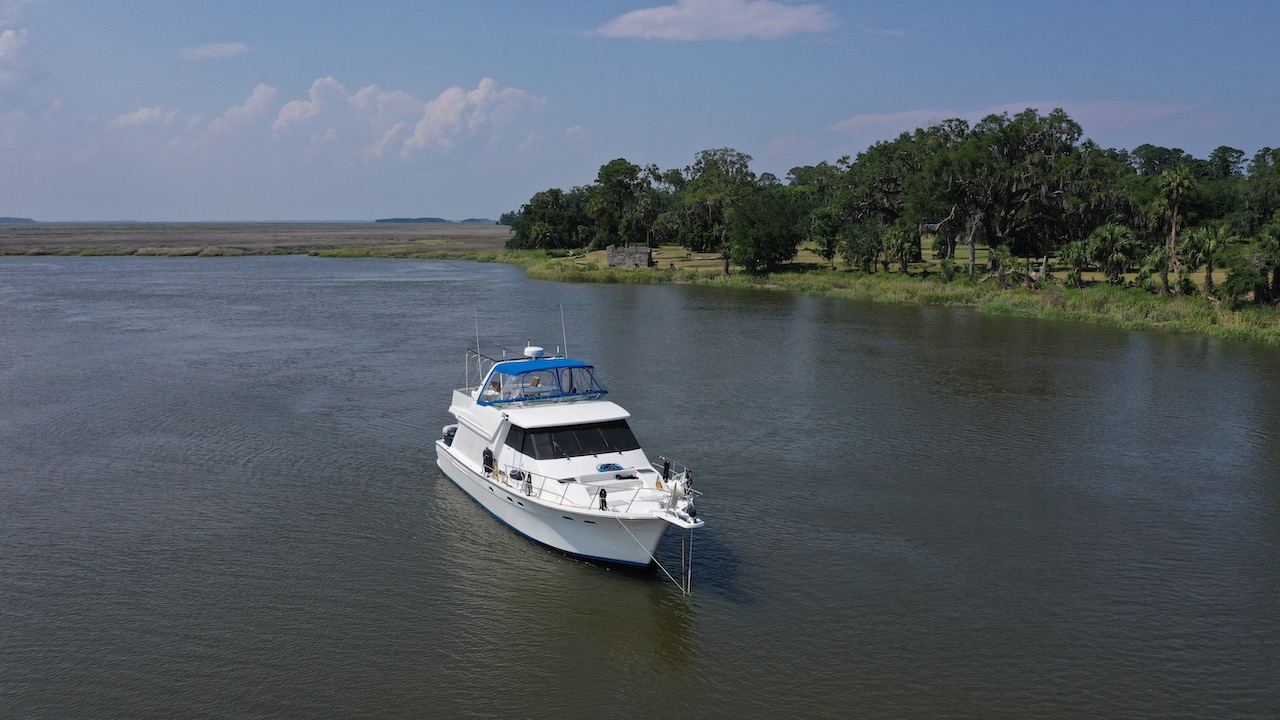
Our boat is a 1999 Bayliner 4788 that we acquired for $152,000 in 2017. Y-Not had been maintained & loved by her prior owner.
She’s 47′ long (as per documentation, but really 52′), 15′ wide and 30k lbs. Two bedrooms, two baths (one with a bath TUB), four stories tall, dedicated kitchen, salon, pilothouse and flybridge.
Our boat is pretty ‘standard’ issue as far as motor yachts go – being one of the more mass produced models on the market.
We own both free and clear (just paid off the boat – woohoo!), so we have no payments on either. And while our boat cost more to acquire than our bus, there are boats and RVs of all price ranges out there.
Differing Travel Styles
Bus Travels
From 2011 – 2017, we traveled full time in our bus typically covering about 6-8k miles a year. We would mix up our stays between boondocking on public land, moochdocking with friends, Harvest Hosts (save 15% with our affiliate link) and stays of several days in public parks (state, county, city, federal, etc).
About once or twice a year we’d take a monthly spot to get caught up on life, and mixed in some volunteer hosting.
Zephyr is now our home part of the year and will be spending her foreseeable future seasonally roaming around the desert southwest, with a basecamp at our Co-Op park in Arizona where we have a lifetime lease to a lot.
Boat Travels
When traveling in our boat, we’ve found a delightful pace of cruising for a week or two spending most nights anchoring out, and then finding our next extended monthly stay at a marina in a cool new city to explore. Thus far, we’ve been covering about 500-1000 miles a year. We intend to cruise from spring to fall, and then return to RV life for winters.
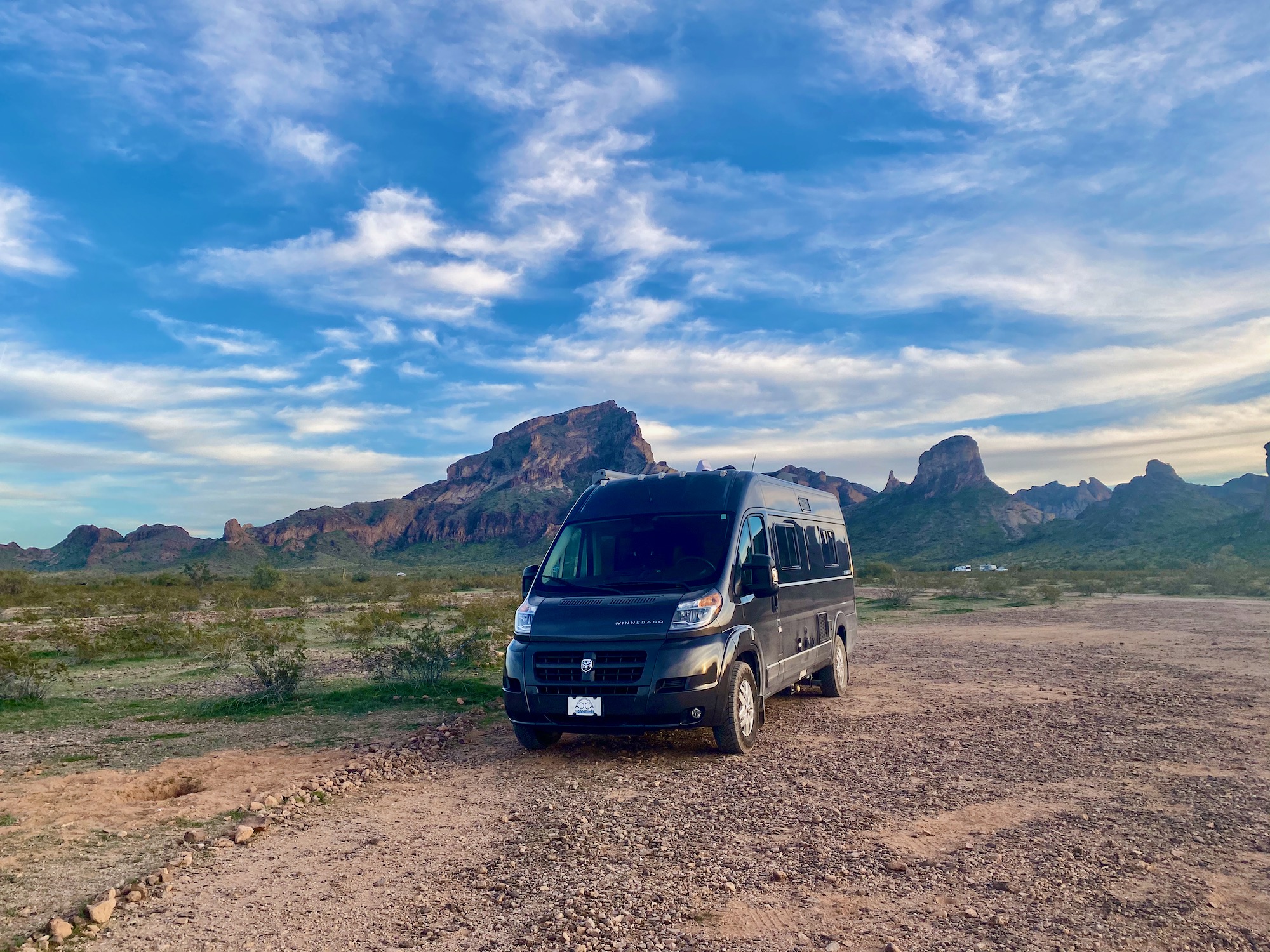
Van Travels
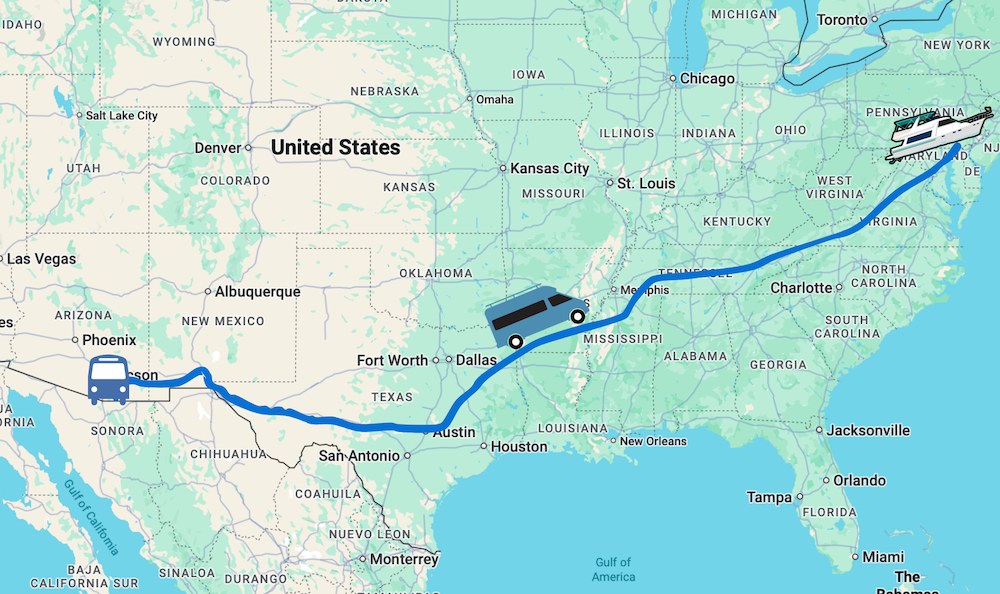
We do also now have a van conversion that we added to the fleet a year ago that we use for short camping trips, as a daily driver, and for transport between our boat and bus seasons.
Those costs aren’t being compared here – but obviously, the van is the cheapest of all our options to operate.
Service Months: Explained
For the purposes of trying to compare the costs, I’m using service months as opposed to owned months in the monthly averages below.
At the time of this writing, we’ve owned Zephyr for 103 months – but have had her in service for 75. Service is basically months we’re traveling/living in the bus and the boat is in storage.
We’ve owned Y-Not for 39 months, however only 29 of those have been in service. Service is months we’re traveling/living aboard the boat and the bus is in storage.
I’ve taken our life to date totals for each category & vessel and divided by the service months. So the monthly costs below can be treated individually, they don’t stack on top of each other (ie. we’re not paying $248 + $164 every month in fuel – it’s one or the other each month).
Fuel
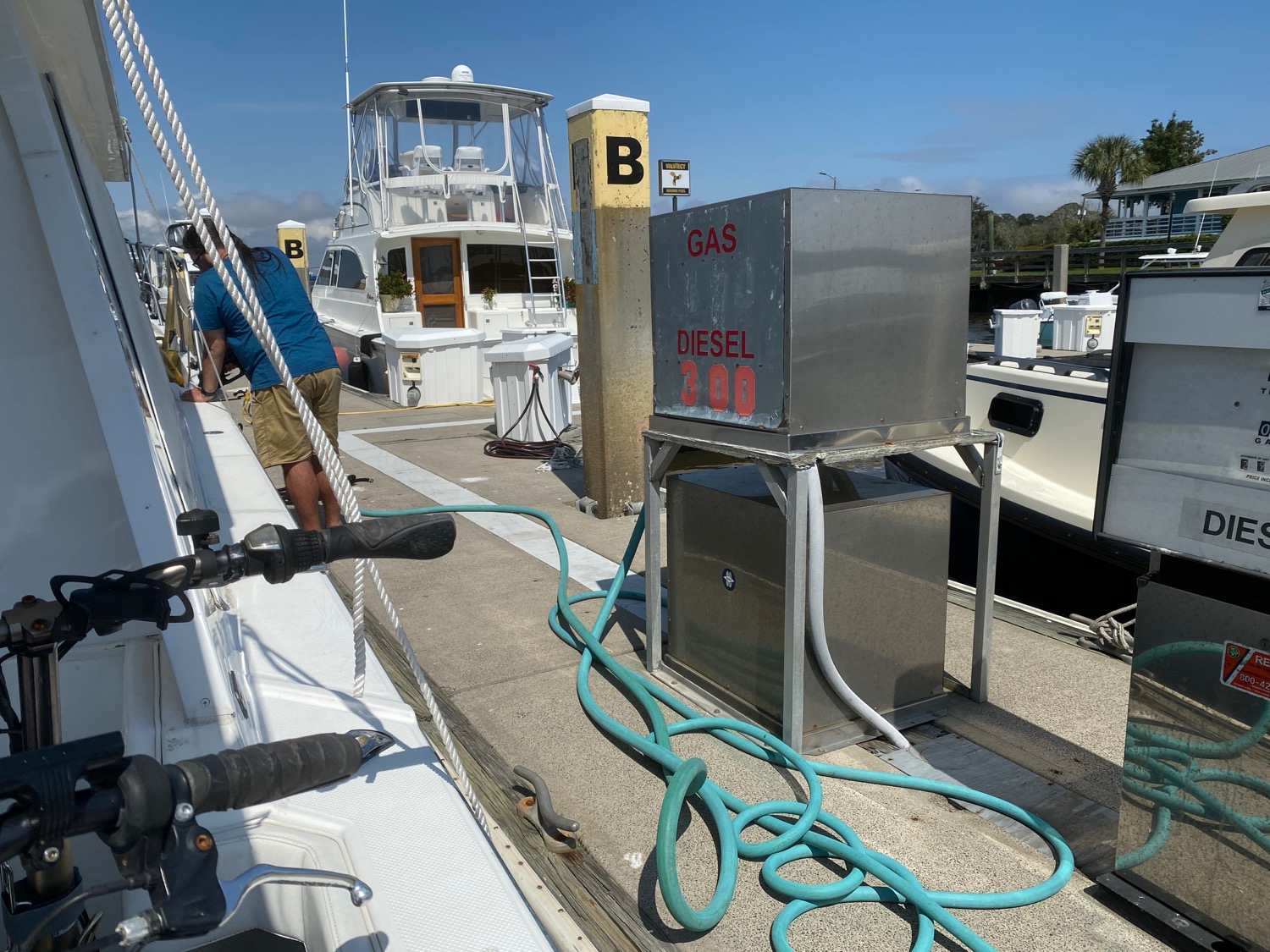
Or as we prefer to call it – pouring rent into the tank. Fuel to us is part of our housing costs as nomads, not just a transportation cost.
- Our bus, with a Detroit Diesel 8v71 2-stroke diesel engine has averaged about 7-8 mpg.
- Our boat has dual Cummins 370HP 4-stroke diesel engines, and we tend to be averaging about 1.8 nautical mile per gallon.
Certainly not great fuel ‘economy’ for a vehicle, but actually not bad for moving a house around the country. And comparing just miles per gallon, the bus might be looking like a winner in this category.
But the other way to look at it as how many gallons per hour we burn. Traveling at 50-55 mph on average, our bus burns around 7 gallons per hour. Our boat averages around 6-7 knots of speed, and thus only burns around 3.5 gallons per hour.
And since we set our travel pace by how many hours we’re spending driving/cruising, not how many miles – it’s actually been cheaper to operate our boat (crazy, right?!?).
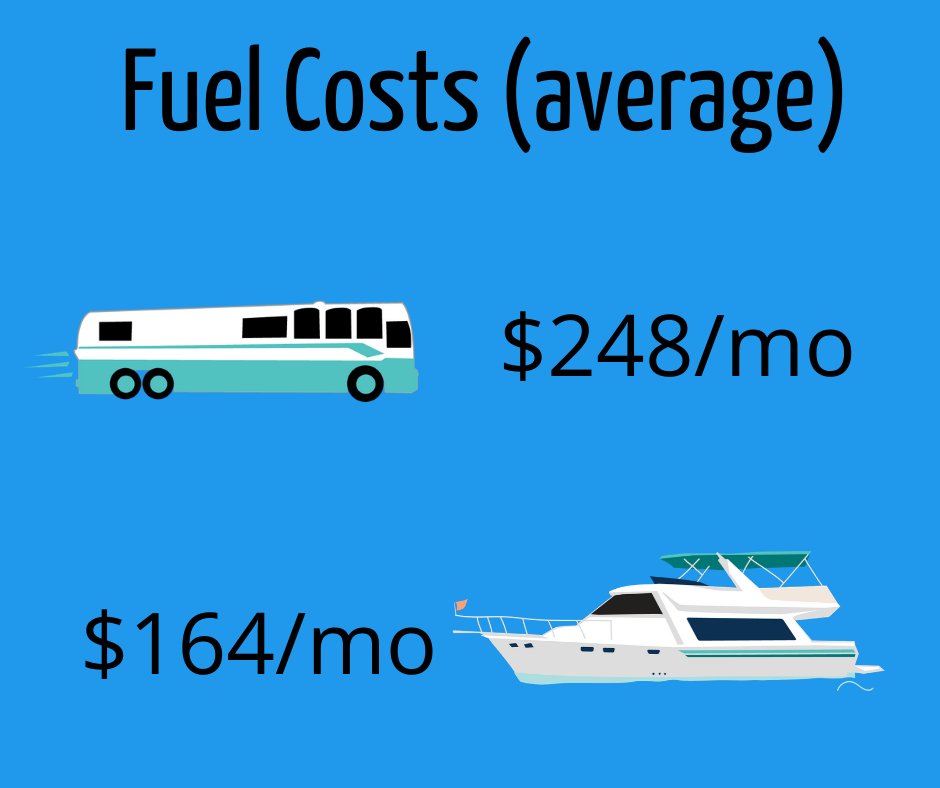
Score one for the boat!
This is simply because back in our bus full timing days our pace had us more in motion and covering more miles.
Going forward, we expect our bus fuel expenses to go way down as we keep our travels very regional and seasonal.
The boat will probably remain about the same – maybe a bit more if we ever hasten our pace along the Loop.
And the majority of our actual miles will be in our van as we move between the two – which gets about 16-17 mpg.
But overall, fuel makes up a small portion of our overall expenses. I think our wine costs are higher (and we don’t drink nearly 3.5 gallons an hour!).
For more on this topic, we dive deep in this post/video:
Pouring Rent Into the Tank: A Perspective on Fuel Costs for Full Time RVers and Boaters
Dockage versus Campgrounds
Paying for somewhere to be. This is an expense category that can vary widely by your own style of travel.
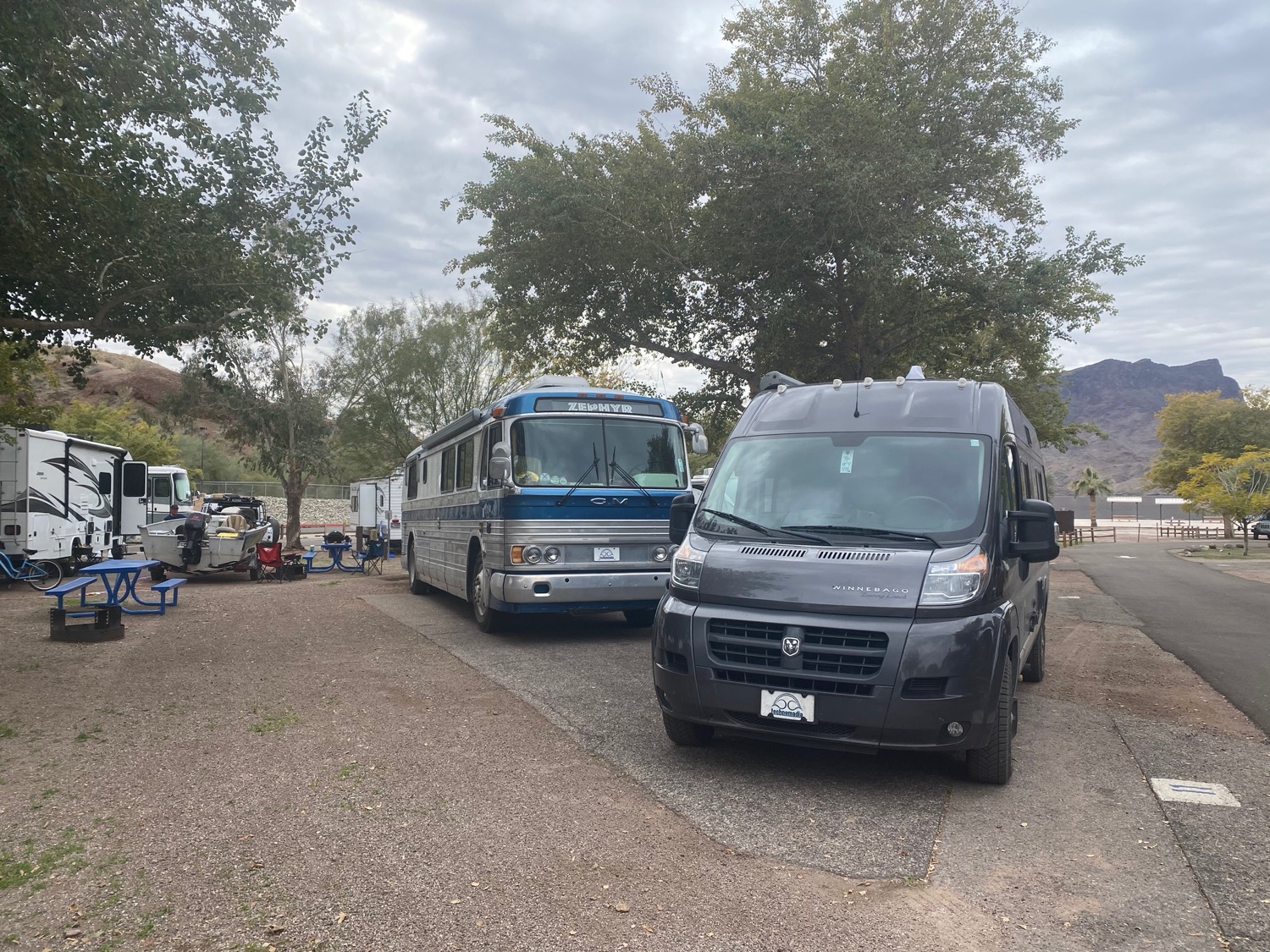
For us, we approach boat and RV life differently.
Staying overnight in our RV in a public campground (state park, county park, Army Corp of Engineer) is quite affordable at $20-35 in many places.
But overnights at a dock in the boat can get quite crazy expensive at $1-4 per foot (which means we could be paying $50-250 per night).
We enjoy free stays in both vessel by boondocking or anchoring out – and tend to do several weeks of that a season in between our paid stays.
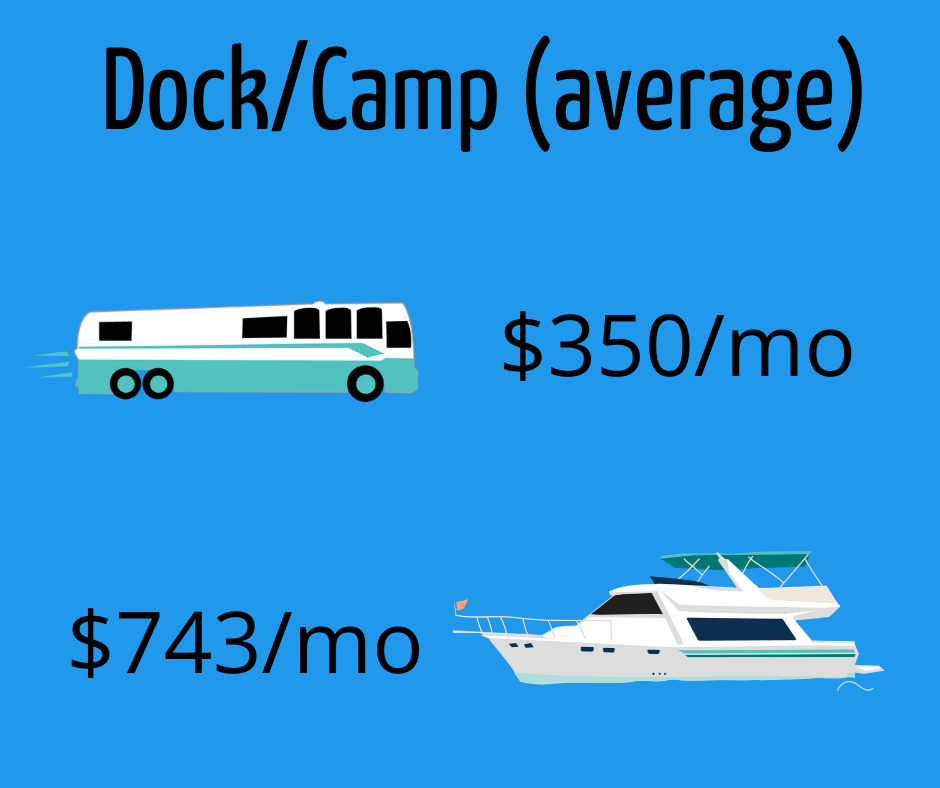 Our big difference between our two primary homes is those paid stays.
When RVing staying put for a month at a time is an exception, not a norm. We tend to do more stays measured in days not weeks.
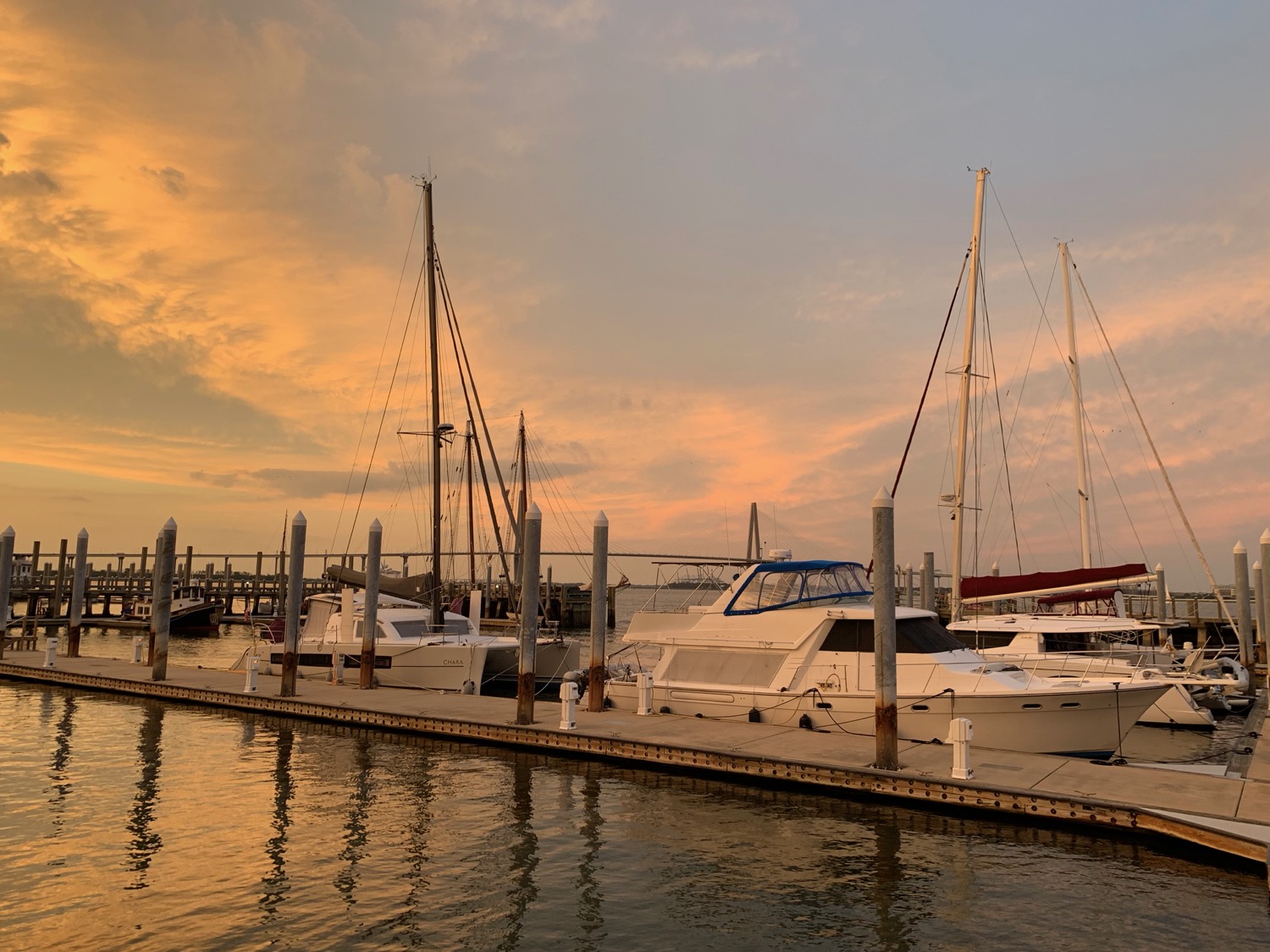
Whereas with boating, we rarely do nightly or weekly stays and optimize for more affordable monthly stays.
And when comparing monthly marina stays to monthly RV park rates – they’re not all that different in terms of costs. We’ve had marina rates ranging from $600 – 1400 per month ($900 being fairly typical) for our 47′ boat.
And that’s for waterfront (duh) locations usually within walking distance of cool downtowns to explore, which is rare for an RV Park.
So, in this category – boat life has been more expensive (yet still mighty affordable) and pretty awesome for us.
More on marina costs:
Co-Op note: This isn’t factoring in the cost of our lifetime lease and on-going maintenances fees to our Co-Op RV park in Arizona, which we more consider part of our bus storage costs. We also will get most of that back when we sell our lease. Our electricity cost when staying in the park is factored into our average RVing costs.
Insurance
Insurance costs are definitely higher on the boat, and your actual costs here will be highly individual to your unique factors.
We carry full coverage for both vehicles with higher deductibles and high liability limits, as well as uninsured coverage. Our RV policies include a full-timers rider that gives us personal liability and contents coverage too (similar to what a house policy would include).
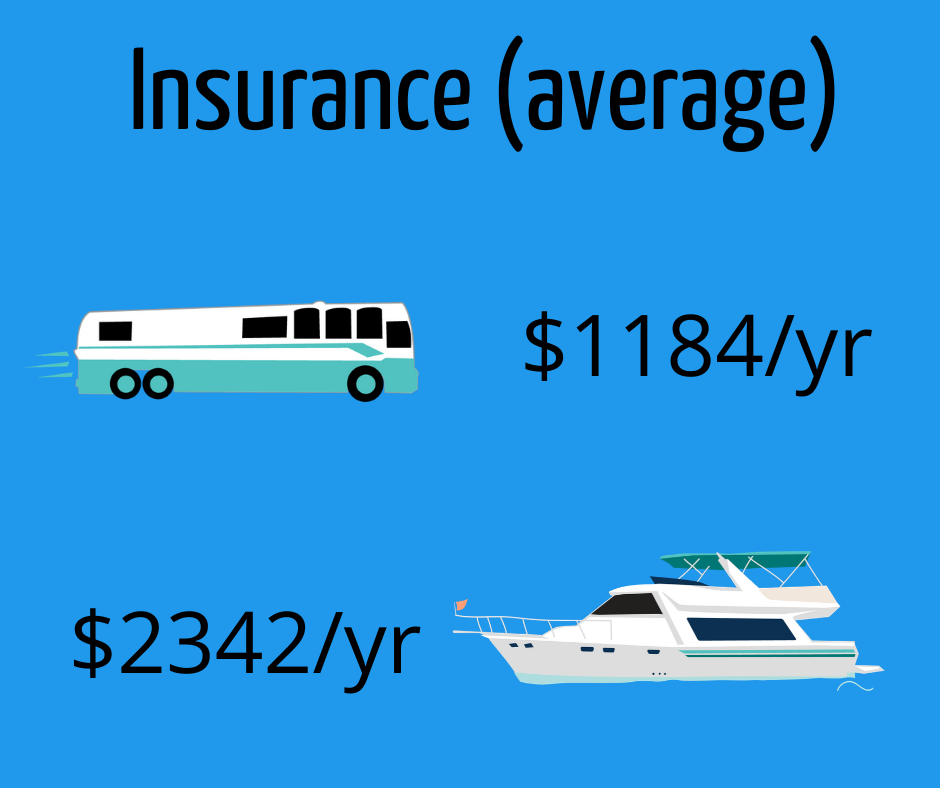
Part of the premium difference is the value we have each insured for, the boat about 70% more than the bus with all of the upgrades we’ve done to both. But the biggest difference is just marine versus RV policies.
We’re not insurance experts and definitely don’t want to play them on the internet – so if you have questions about this topic we highly recommend contacting a broker you trust.
For full-time RVing policies, we love Gina at Epic Insurance. You can also find leads within RVing clubs like the Escapees.
For boating policies, look for recommendations within your boating memberships. We found ours via the MTOA and AGLCA.
Maintenance
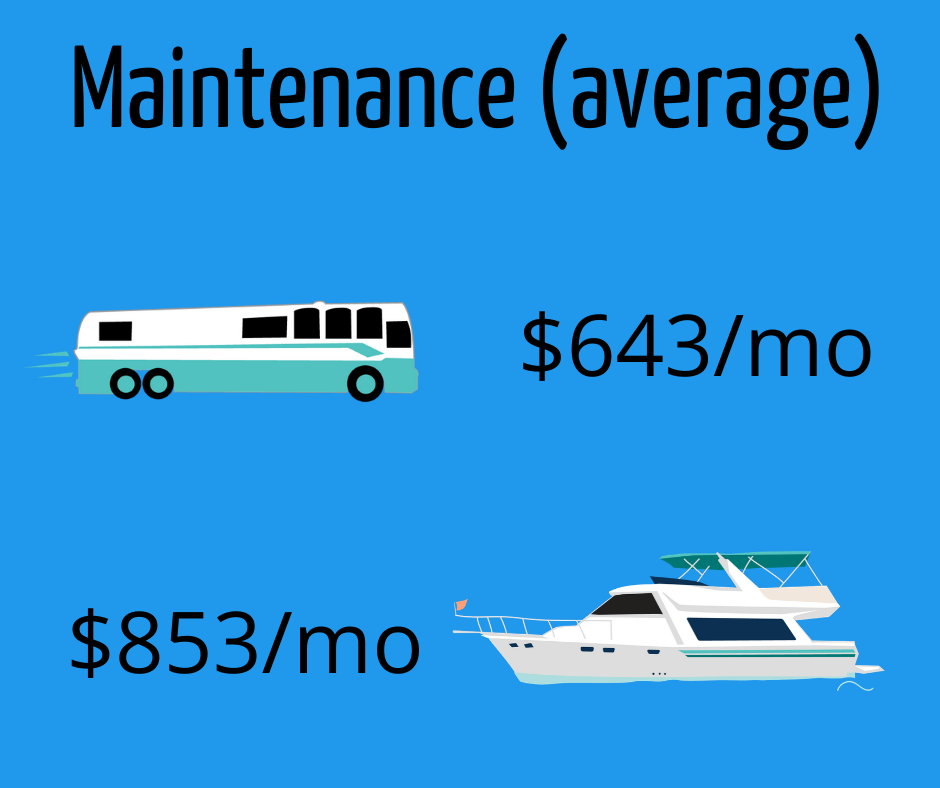
Quick answer, the boat costs a boatload more to maintain. As expected.
And please note – these expenses only include the mechanicals – the things needed to keep our bus and boat moving. It doesn’t include house systems (like plumbing, ACs, awnings/canvas, electrical) and various systems upgrades.
Bus costs
So remember I mentioned that we bought our bus for a song, but with 15 years of neglected maintenance? That means we had a LOT of maintenance costs to gradually catch up on – including a full out of frame engine rebuild. All and all, we’ve spent about $50k since 2011 keeping our girl on the road.
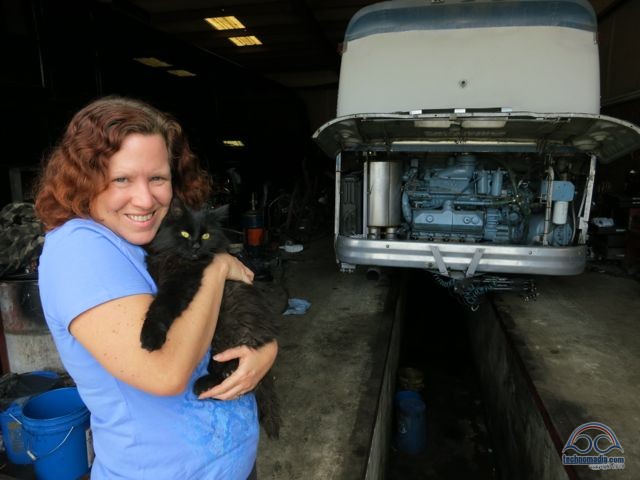
I really don’t know what a more typical modern day motorhome might cost to maintain. And owning a vintage bus does not necessarily mean you’ll need a $25k engine rebuild either (but not a bad idea to have emergency reserves at the ready).
In our years with Zephyr, we’ve also gone through two sets of tires at about $3500-4000 each time around (replacing every 6-7 years). And we’ve had a lot general stuff replaced and maintained – air bags, brakes, air drier, bearings, king pin, valves, etc. etc.
But a typical annual engine maintenance of oil & filters & chassis lubrication typically runs $300-500 in a bus shop (easiest done over a pit). And we anticipate other major projects throughout the year to keep a 60-year old vintage vehicle safely on the road.
Boat Costs
I wanted to wait to share maintenance numbers until we had gotten past some major service items we knew were coming due – like air coolers and turbos. Now that we’ve tackled these, we think our numbers should be fairly standard that others can budget around for maintaining a boat similar to ours.
General Engine Maintenance – Range of $500-3000/year
We have dual Cummins 370s, which are big engines. We’ve had three annual maintenance revolutions now (including oil, filters, impellers and zincs).
-
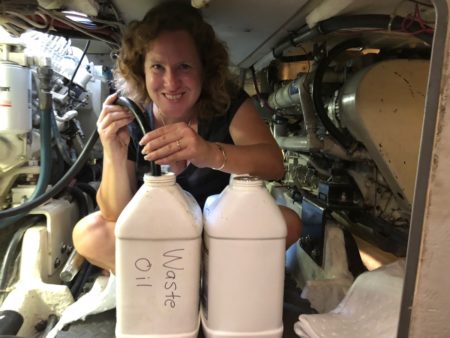
Changing the oil ourselves for our second service. First cost us about $2000 in parts & labor (we hired in a local mechanic who also taught us).
- Our second cost us about $500 in parts and we did the labor ourselves.
- And the third we had done earlier this year as part of other boat yard projects to the tune of about $3000 in parts & labor. This also included belts and transmission fluids.
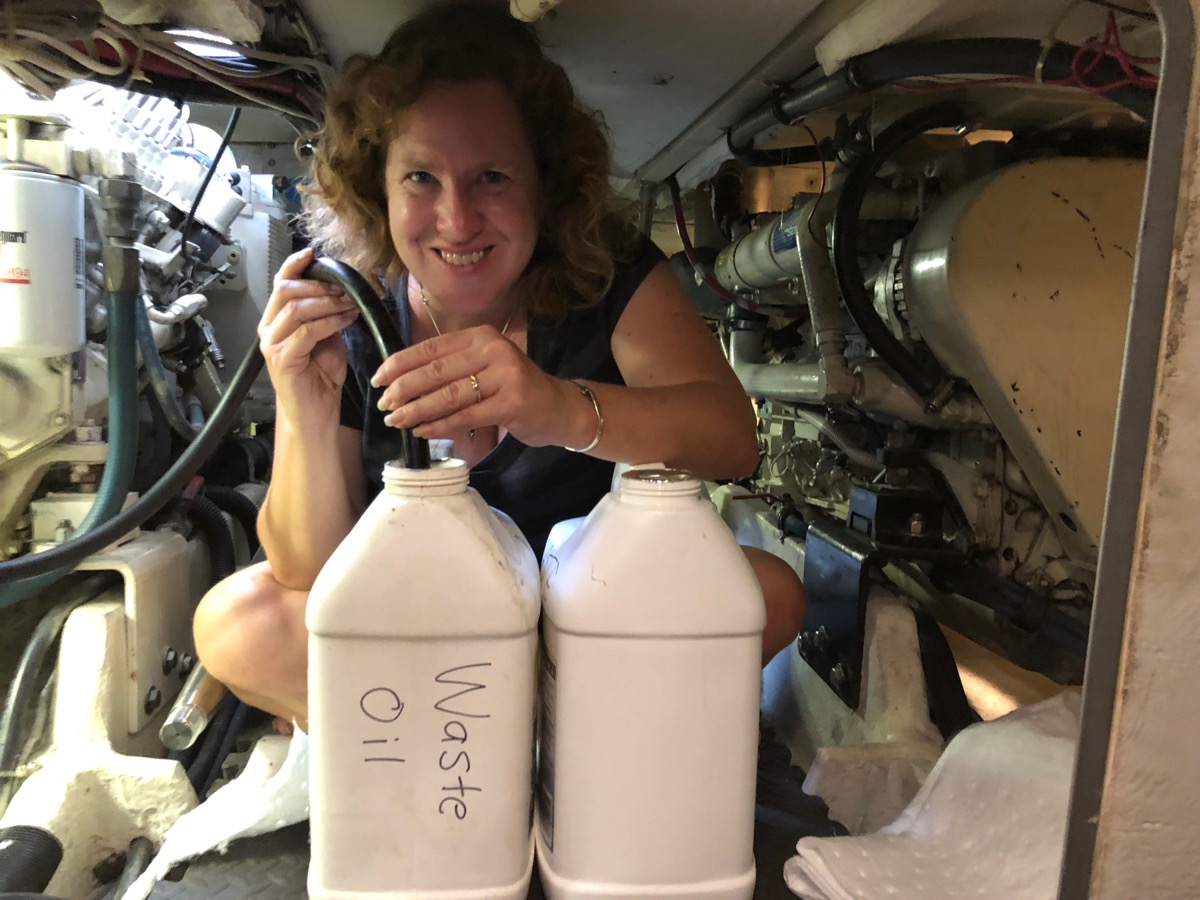
We’ll continue to balance out pro vs DIY into the future.
Major Engine Services
The prior owner had not serviced the after coolers in a while, so we knew that was pending when we purchased. We had them removed, cleaned, rebuilt, painted and re-installed for $3300 recently at our last boatyard stop.
And a while back we noticed that the seals around our turbos were dripping oil, so another $3300 to remove those, rebuild and re-install those last year.
Bottom Jobs
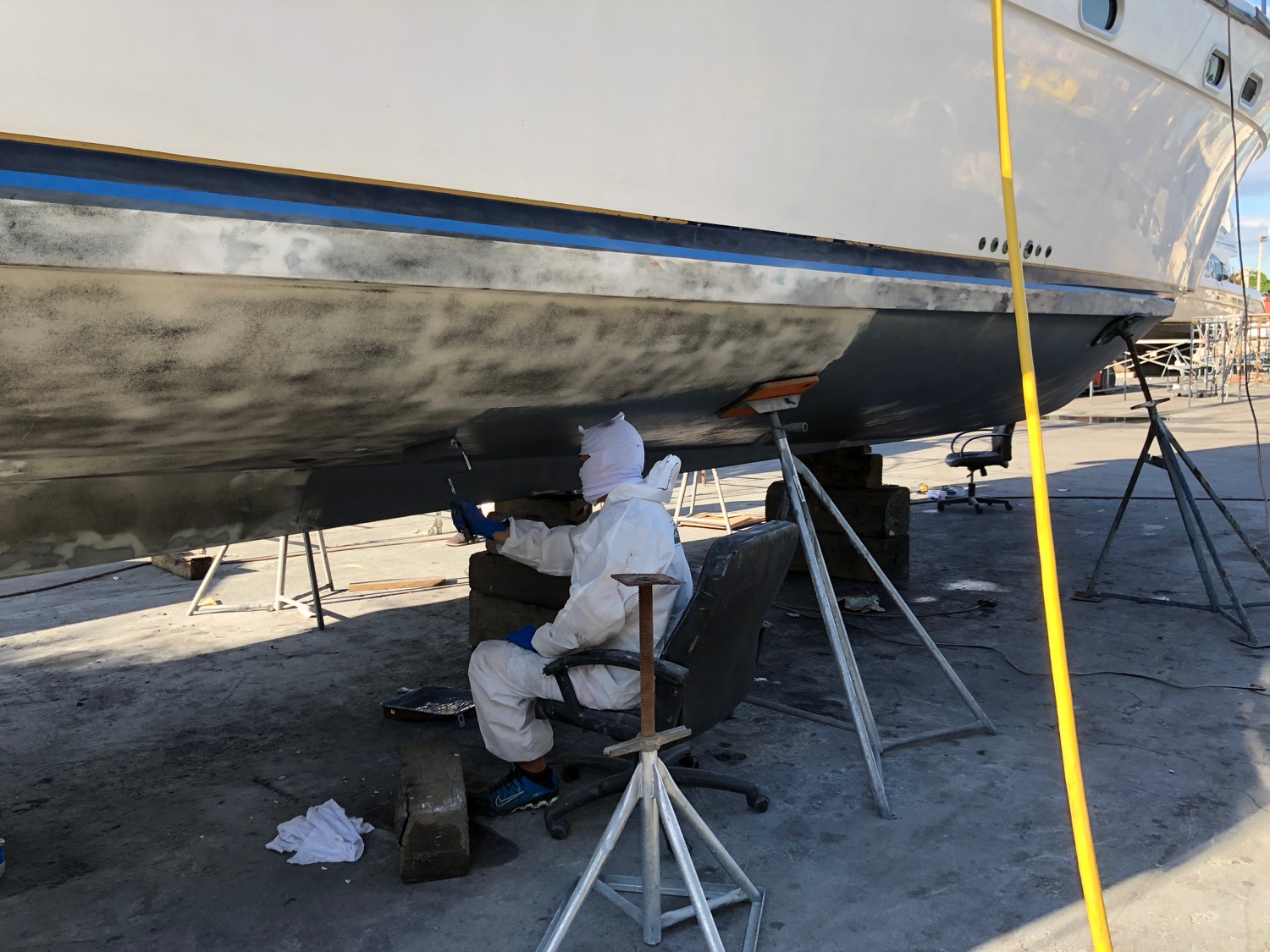
The bottom of a boat is very important to operating your vessel, and stuff grows on it. Like an entire ecosystem. Overnight.
To keep on top of it you have to have your boat hauled and the bottom repainted every couple of years (depending on where you cruise). And you need to clean it in-between.
We’ve had two bottom jobs already to the tune of about $4500 each (including running gear).
And we spend between $100-200 every couple of months when in salt water to have a diver go under our boat and scrape stuff off (and replace anodes).
Whew.
Ok – that wasn’t so bad.
And the winner is:
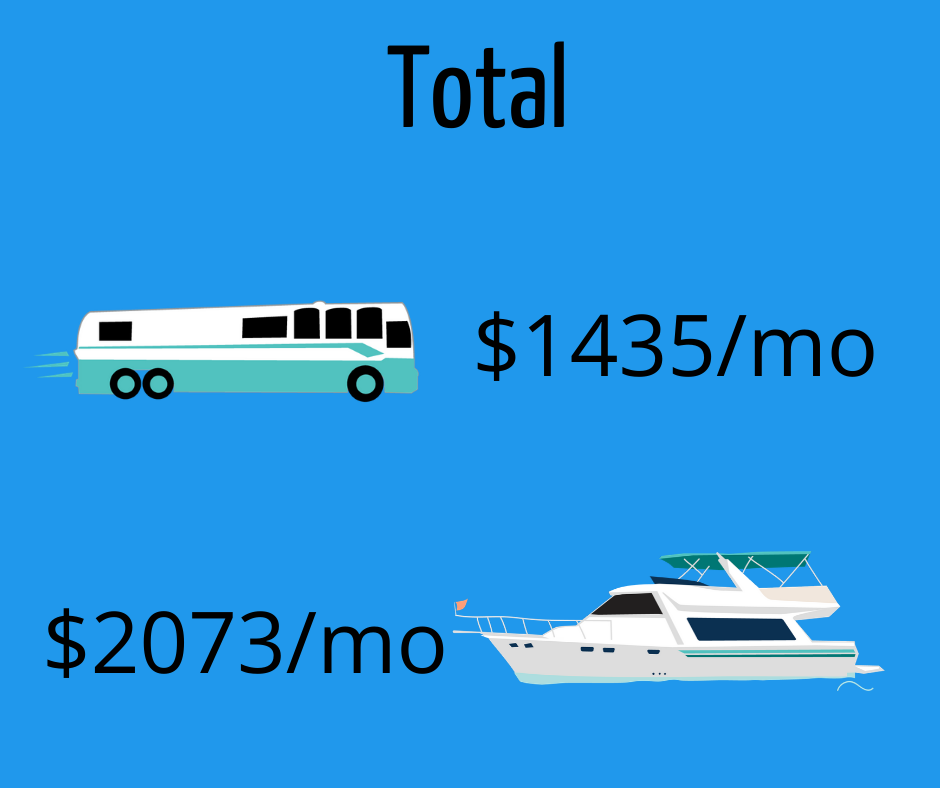
Yup – no surprise. Our style of boating costs more than our style of RVing.
And we were totally prepared for that in thanks to others sharing numbers like these when we were doing our research (and it’s been totally worth it!).
Hopefully sharing these numbers can give others a data point for consideration in their research when deciding if boating, motorhoming or both are within their grasp. But don’t focus too much on our exact numbers – every RV and boat is different. And every lifestyle is different too.
There’s of course other monthly living expenses on the road like connectivity, health insurance and general life stuff. And we also have storage costs for the vehicle we’re not using in any given season.
Head on over to our extensive monthly cost log that we’ve shared since 2009 if you want to dive deeper into the costs of a full time nomadic lifestyle.
Join us on Sunday – May 10 at 7pm for a YouTube Live Q&A on this topic!
Thanks for sharing the informative blog about Boat vs RV,I really love it.
Thanks for your analysis, which is very detailed and convincing. It looks like we should start our adventure with Rvs first as its cost and also easier than using a boat.
Great blog with very very interesting information. GOD JOB!!!
I really like you blogs and I couldn’t stop reading all of them.
I am sure it will help me a lot for my future decision RV or Boat…..?!?!
Thanks a lot for your afford!!!
Good luck and have always a safe trip!
Cherie It’s great that you guys share so much info. Enjoy reading your posts. Have no interest in full timing on a boat but still enjoyed the read. A Model A is plenty for us.
We haven’t hit the road full-time yet, and we’ve had more than a few discussions weighing the pros and cons of Vanlife vs Boatlife, so your article and website breaking down the cost of each is going to be a very valuable resource for us. Thank you for sharing your experience!
Great post guys! Just like with RVing costs it is all highly individual. For us it is the opposite – RV is MUCH more expensive, but my sailboat is much older and smaller and while it is great for a weekend or even a week it is not really suitable as a full time liveaboard. Also since I have been around boats for over 40 years I can do almost all my own maintenance.
Thank you for sharing this. Really enjoyed reading and learning. Our motorhome has definitely cost us more than I originally expected, but still less than some of the newer ones we considered since we we avoided depreciation by buying a 20 year old rig. We bought ours for $25K and have put more than that into upgrades and repairs in the last two years of ownership. Recently we had a $9K engine related repair that we were not expecting that significantly raised our operating expenses. But still less expensive than our former stick and brick lifestyle, especially as we no longer have a separate travel budget because our lifestyle is centered around travel. One of the biggest advantages of our mobile lifestyle is we have more variable (not fixed) expenses than traditional housing. If we want to spend less, we move less and stay longer. Saves on fuel, repairs, and where we stay. Our campground fees are low thanks to boondocking and campground memberships. Thanks again.
The awesome thing about buying older & used is that you can use the money instead to make it your own. We love that about our bus too. Those big engine repair bills still sting however.
Great video! Really enjoyed how simply yet thoroughly you broke everything down for us.
Thank you.. took a while to wrap my head around just how we were going to compare two completely different fruits.
We find that the general rule of thumb for a boat of operating costs at 10% of the boats value is true. Maintenance, insurance and dockage work out to just about that cost for us. My husband is very handy so we do most work ourselves. Changing oil, impellers and zincs is fairly easy if you have an onboard oil changer. We are in Michigan; so we don’t need to clean our bottom and we are hauled out every winter. So, cleaning and waxing the exterior is a spring chore. We own our well in a similar situation like your Arizona spot. It’s considered a “dockominium”. That is a huge savings in yearly costs because no one is trying to make a profit on us. LOL
Dockage is tricky when traveling. The opportunities to “anchor out” are not as numerous but can be done.We tend to stay at state marinas when we travel; just because we know them and have not researched private. We live in a beautiful state for boating. I know when you make it this far you will love it.
Hmm… we had always read the 10% rule applied only to the maintenance? In that case, we’re both ahead of the trend so far 🙂
We looking forward to one day finally cruising your area!
Great write-up, thanks for the detailed analysis. Not surprising the boat is more expensive…I thought it might be even higher!
Yup, not surprising at all… but I think many assume the boat is substantially more. It certainly could be if we did nightly marina stays more often.
Lovely to read the article. I’m pretty much a boondocker and free campsite seeker. My parking costs last year were $560.00 New springs and replacing the air bags with timbrins was $2800. The brakes were gone (again) for a further $1600.00. Fuel and oil changes were $2611.24, but I’m a rolling stone. My ride is a 2005 Class C. I expect to have few extra maintenance costs in 2020, but the following year the tires will age out.
We used to do a ton more free camping.. and do still enjoy it. But so enjoy public parks too. I imagine going forward our winter RVing will be mostly at our Co-Op and out boondocking however.