
When you announce you’re shopping for a boat, I can almost promise you that within 5 seconds you’ll hear at least one of these comments:
- You do know what BOAT means, right? Break Out Another Thousand
- The two happiest days for a boat owner is the day they buy their boat, and the day they sell their boat
- A boat is a hole in the water in which you sink money into
No doubt, these cliches have made their way into our vernacular for a reason – owning a boat comes with a price.
That part didn’t dissuade us at all, we just factored that into our budget for pursuing this next adventure.
And we’re glad we did, because it’s all basically true.
Well, except I’d argue BOAT usually stands for ‘Break Out Another TEN Thousand’. (inflation and all)
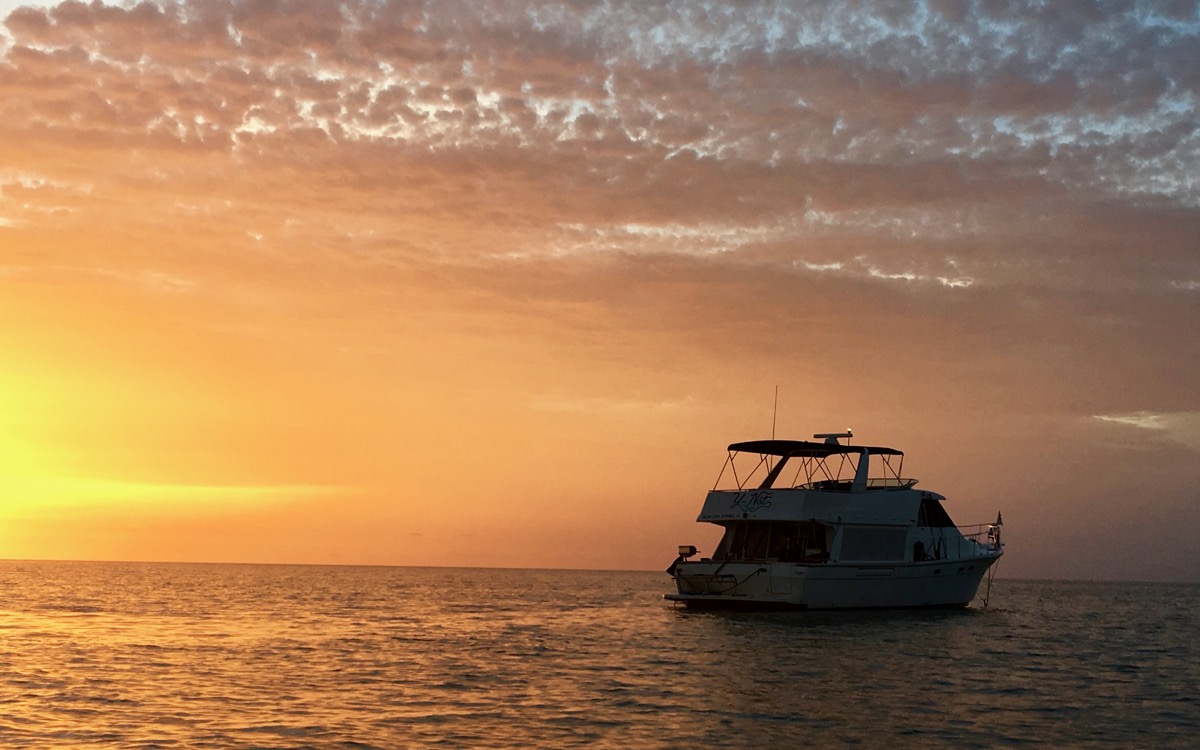
The costs so far have been worth it these past 18 months of boat ownership, and we look forward to many more years of cruising.
We share a lot of the amazing in our travelogues – the sunsets, the rainbows, the drone footage, the fun places we visit. And we try to also mix in the realities – maintenance and learning experiences.
 We were ready for new challenges after over a decade of full time RVing. And boy have we gotten what we asked for, despite lots of research there were several things that caught us by surprise!
A while back we shared 10 Sucky Things about RVing after our first decade of nomadic life – but really, most items were about the nomadic lifestyle that apply to both RVing and boating.
Healthcare, legality, community, continuity and that sort of stuff. So click on over, it’s still a super fun & informative post!
This post is focused on the boating stuff.
First, we took to YouTube this week for a live broadcast on this topic – it’s over an hour long, but chock full of information:
Want to catch a future live broadcast? Subscribe to our YouTube channel and turn on notifications. Or, join us on Patreon – our patrons get announcements when we first schedule an event (usually a couple days notice).
Here’s a quick recap of the topics we touched on:
Staying On Top of Your Bottom

A boat floats in the water – that’s the goal anyway, right?
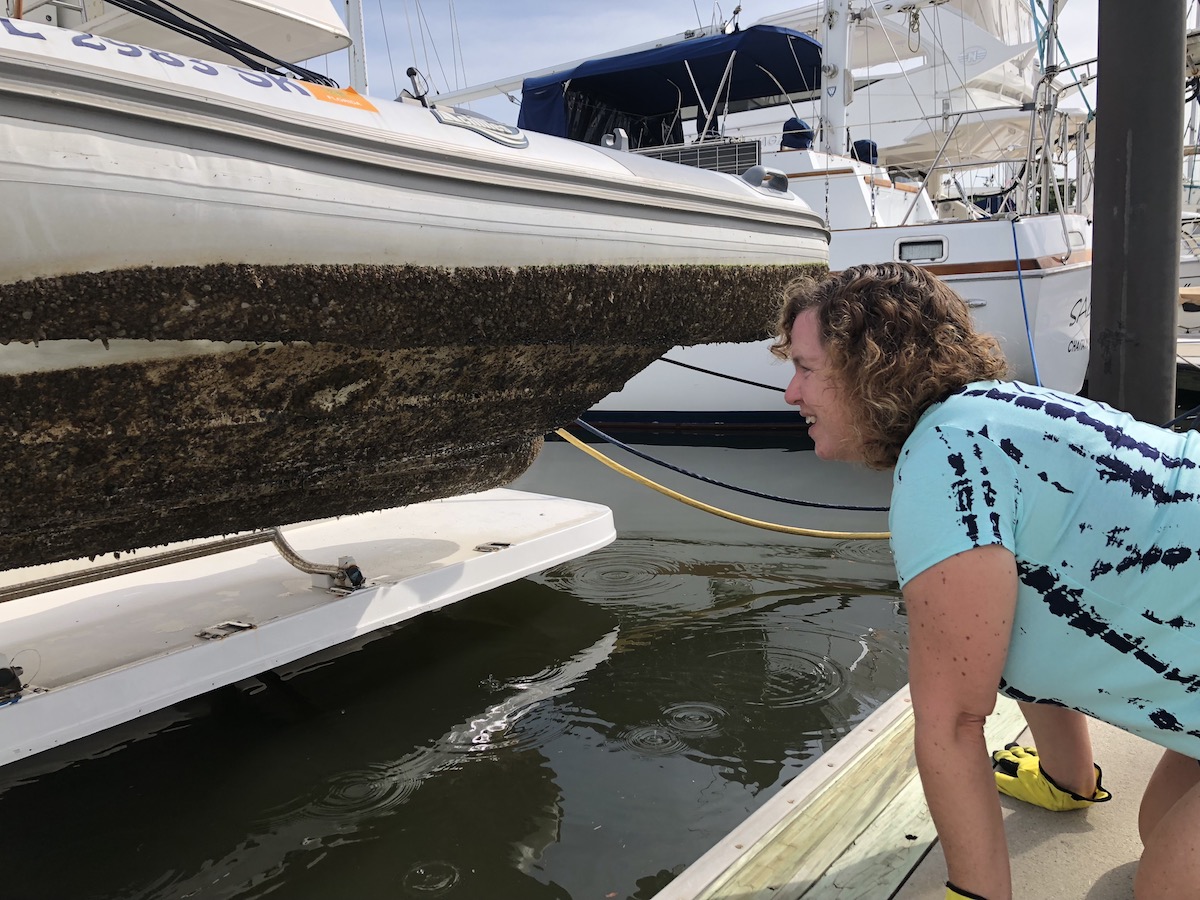
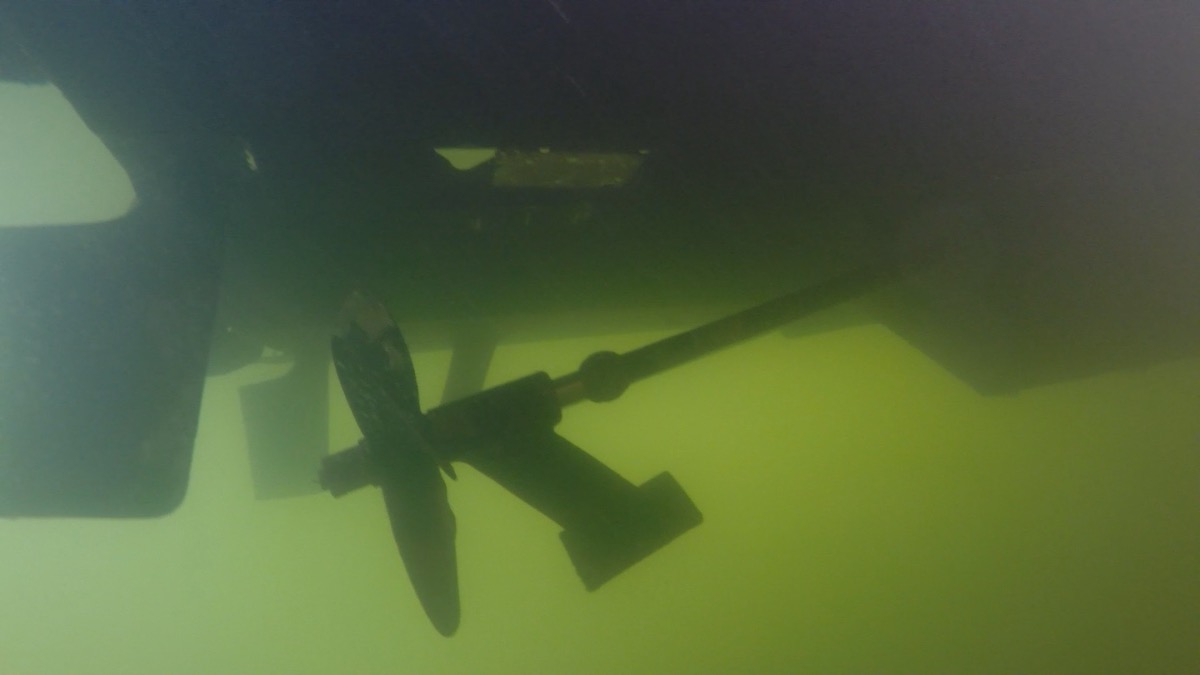
Well, except it’s not pure water. It’s more like an aquarium full of living things. And those living things want to grow on your boat. Barnacles, algae and muck.
All that stuff impacts your cruising speeds and fuel consumption – because it adds resistance to your movement through the water. Like, seriously, slows you down. We’ve seen our top cruising speed go from 12-13 knots while cruising with an aqua farm attached to 18-19 knots right after a cleaning in similar conditions.
Especially in warmer climates, that stuff can grow FAST.
Sure, we’ve watched plenty of YouTube boaters in lovely clear water destinations dive their boat and scrape stuff off.
But it didn’t quite sink in for us until we had our own hole in the water. And our waters along the ICW have thus far been murky.
To stay on top (err.. bottom?) of your bottom:
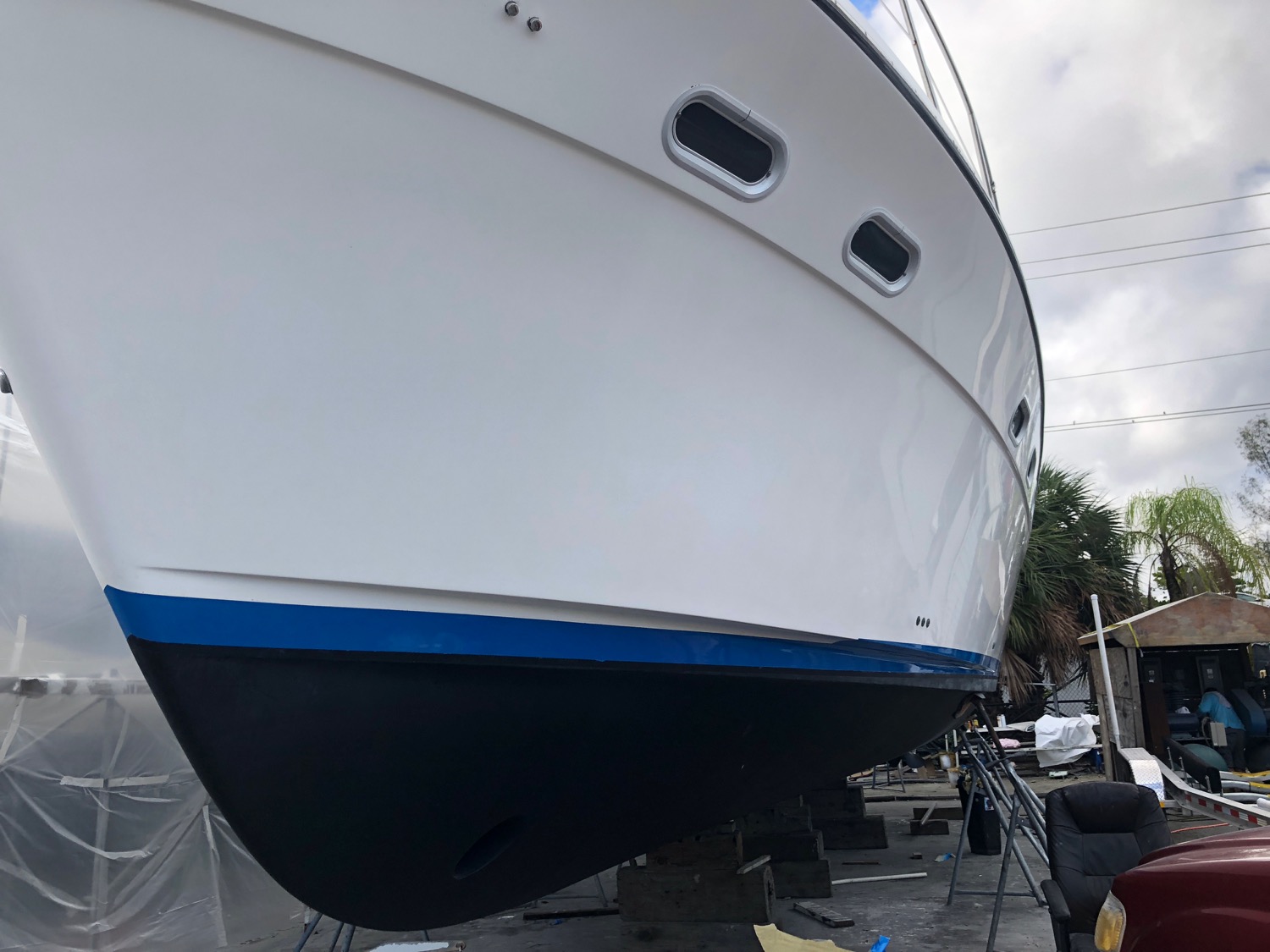
- You need to have your boat hauled out every couple years to apply anti-fouling agents to your hull. This helps slow down some of the growth.
- Every month or so, at least here in the south, you also need to have your boat dived to be cleaned. You can do it yourself, or hire a diver (generally around $2/ft).
Holes In Your Boat
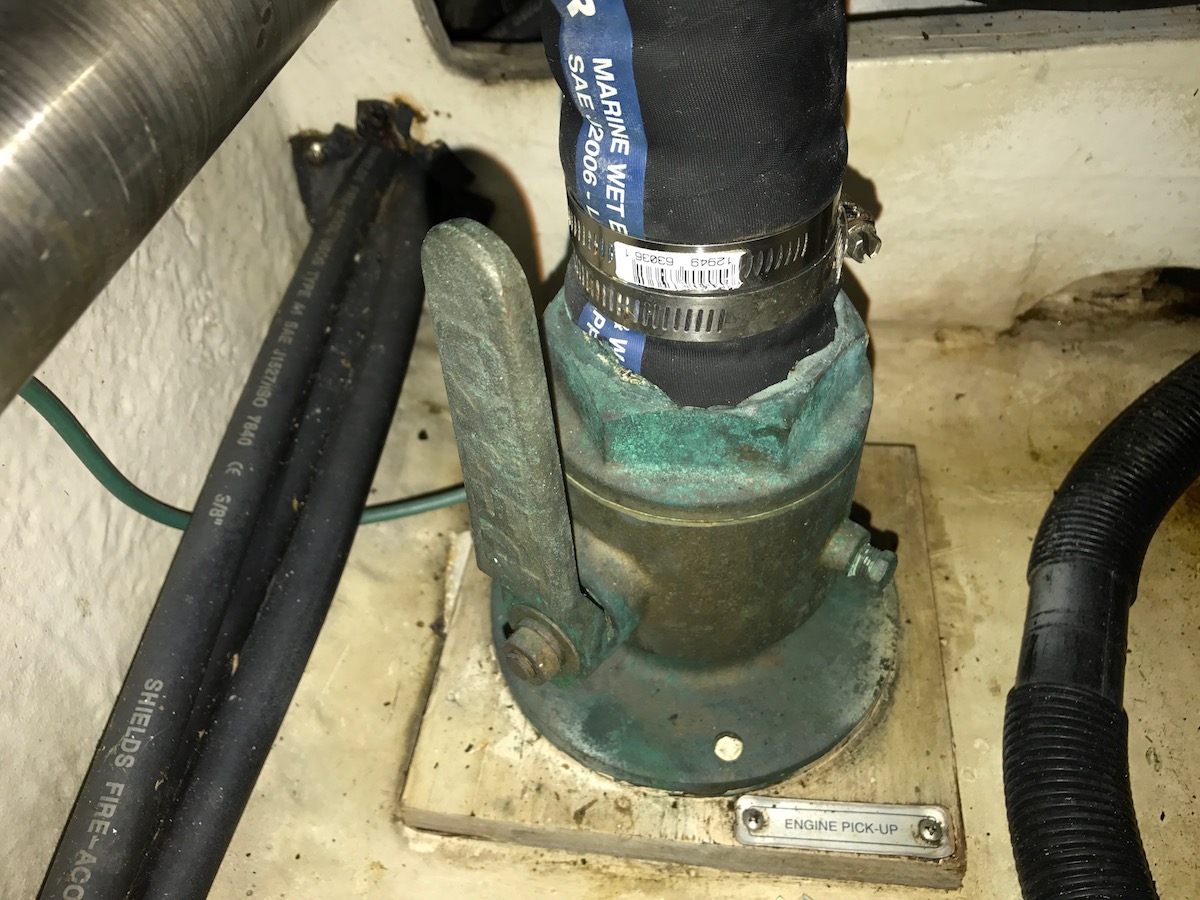
And well, it’s a good thing you have to regularly deal with the underside of your boat, because there’s intentional holes down there! Many systems on a boat use the raw water (ie. the aquarium muck you’re floating in) for cooling or flushing toilets.
On our boat, our three engines are all water cooled, as are our three marine air conditioners. Overall, it’s a pretty efficient method of cooling.
But those holes can fail. And if they fail, your boat fills with water. Which isn’t a good thing. Not at all.
So regular inspections, replacements and exercising of the thru-hull valves (also called seacocks) is a part of regular boat life.
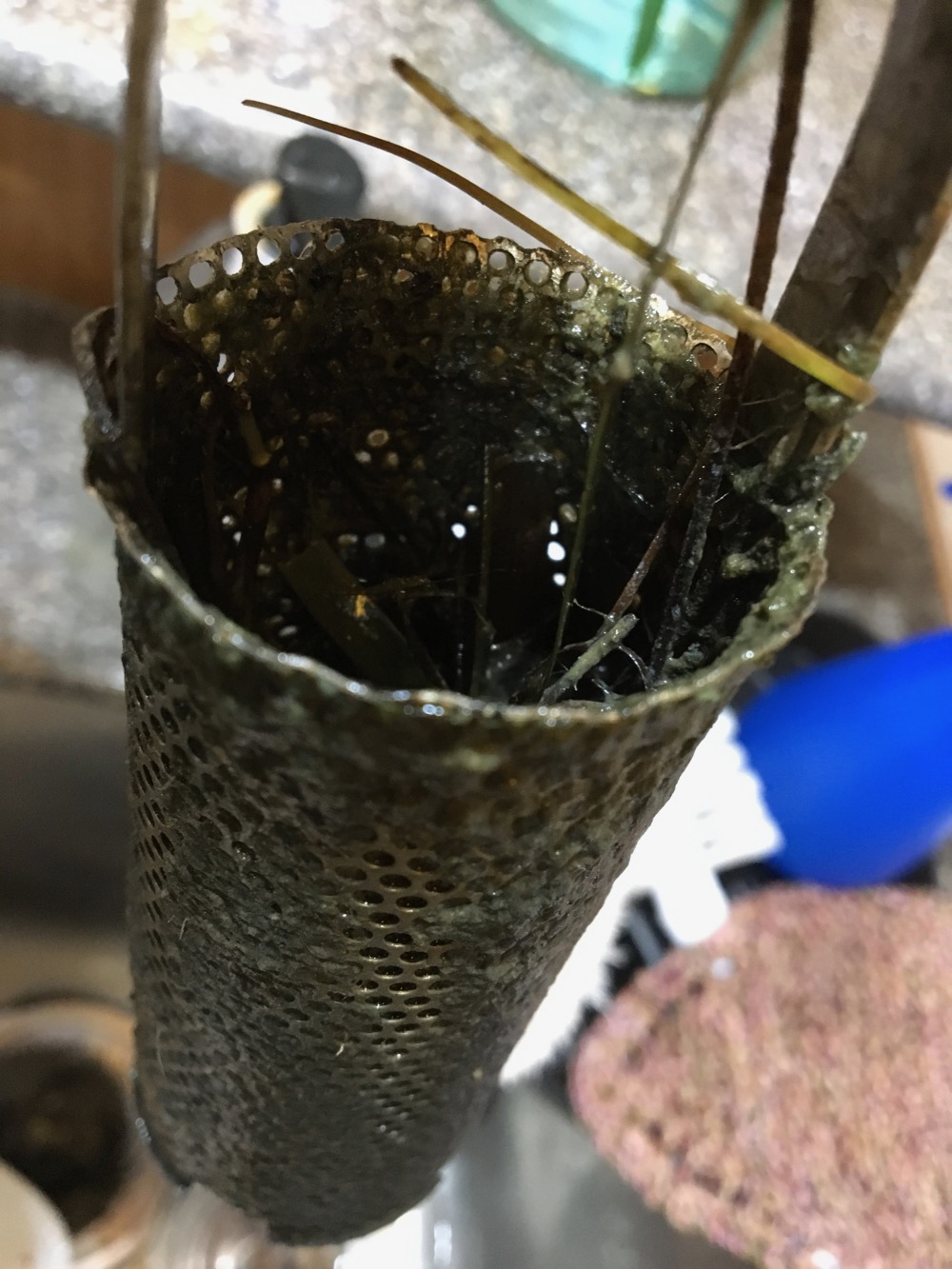
Oh, and to not let all the muck get into your engines or air conditioners – you have these little baskets that try to filter it out.
They’re call sea strainers. And you have to regularly clean them out, or else you block water flow.
Block water flow, you inhibit cooling – and that’s not good either.
Tight Spaces
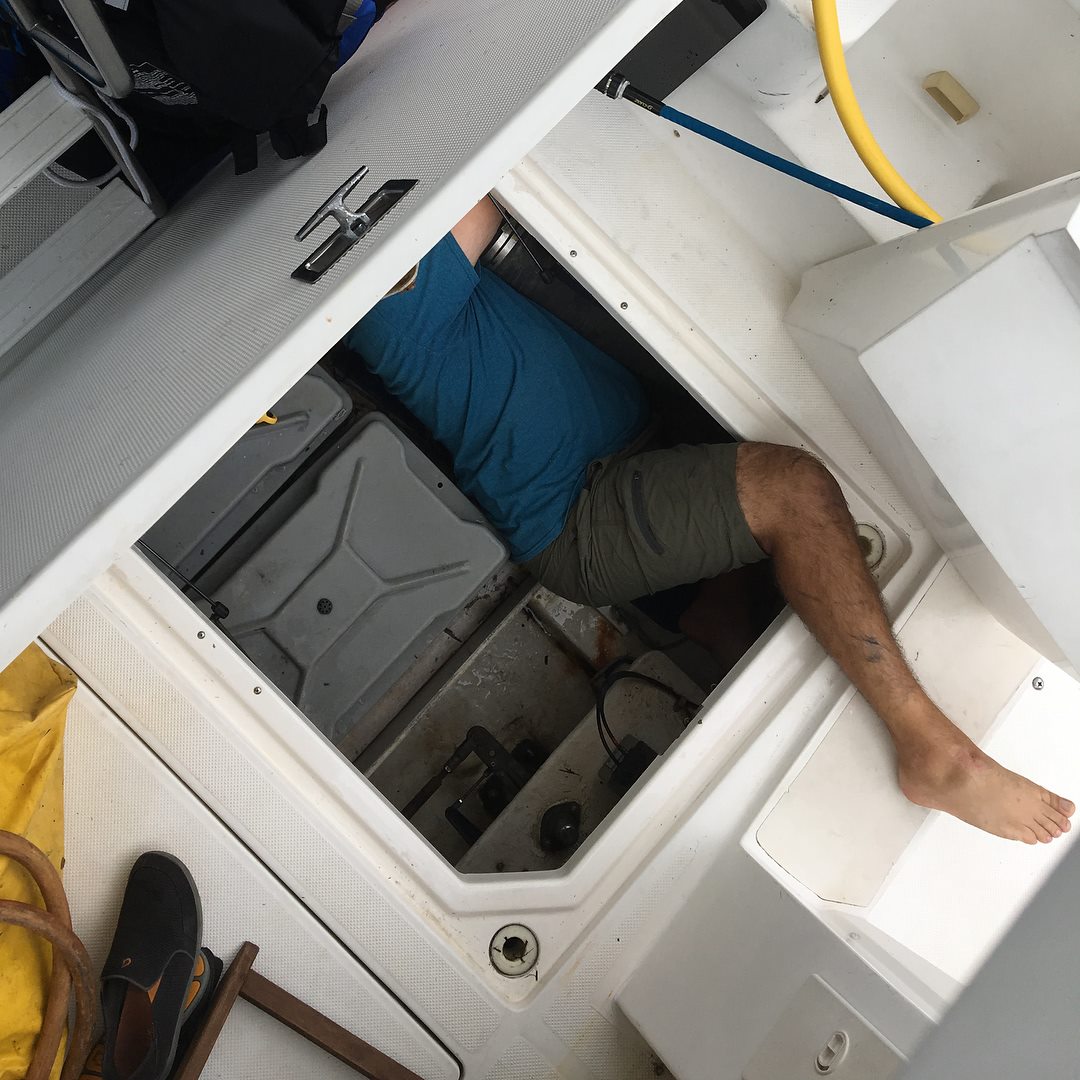
Almost everything you need to perform maintenance on a boat (like cleaning those sea strainers) seems to be in awkward locations.
Often times, you can either see the place you need to do something, or feel the place. But not both at the same time.
So you’re doing this delicate dance of looking and memorizing – and then trying to map your brain to get your fingers there blindly.
Oh, and not to mention you’re generally in some bodily contortion to even reach said location.
Just chalk it up to boat yoga.
Pump Outs
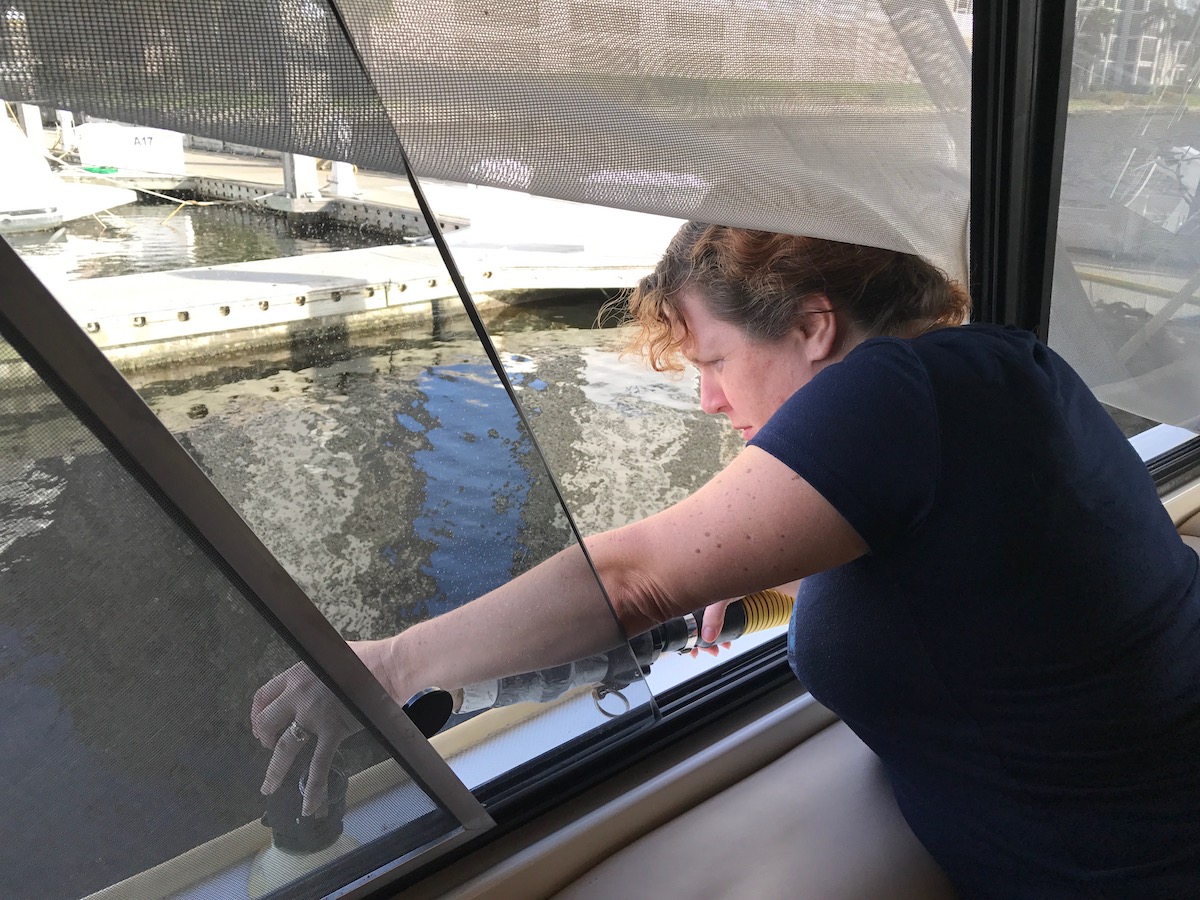
Having been RVers for a decade, we’re quite used to the concept of dumping our excrement. It’s just a fact of life. We all poop.
On a boat traveling in intracoastal waterways or inland, however you don’t dump – you pump. Which means finding facilities that have the equipment for this, which are far less common than RV dump stations.
The equipment is much more complicated than a dump station too – which means they have parts that break. Which means when you find such a station, it may be closed for repairs.
It’s not a huge issue, but it’s definitely one that has been more challenging for us than RVing. We have to plan our pumps more carefully, and be prepared for limited options in some places.
Of course, those who go 3 miles offshore (9 in some places) can legally pump overboard into the ocean.
The Road Is Invisible
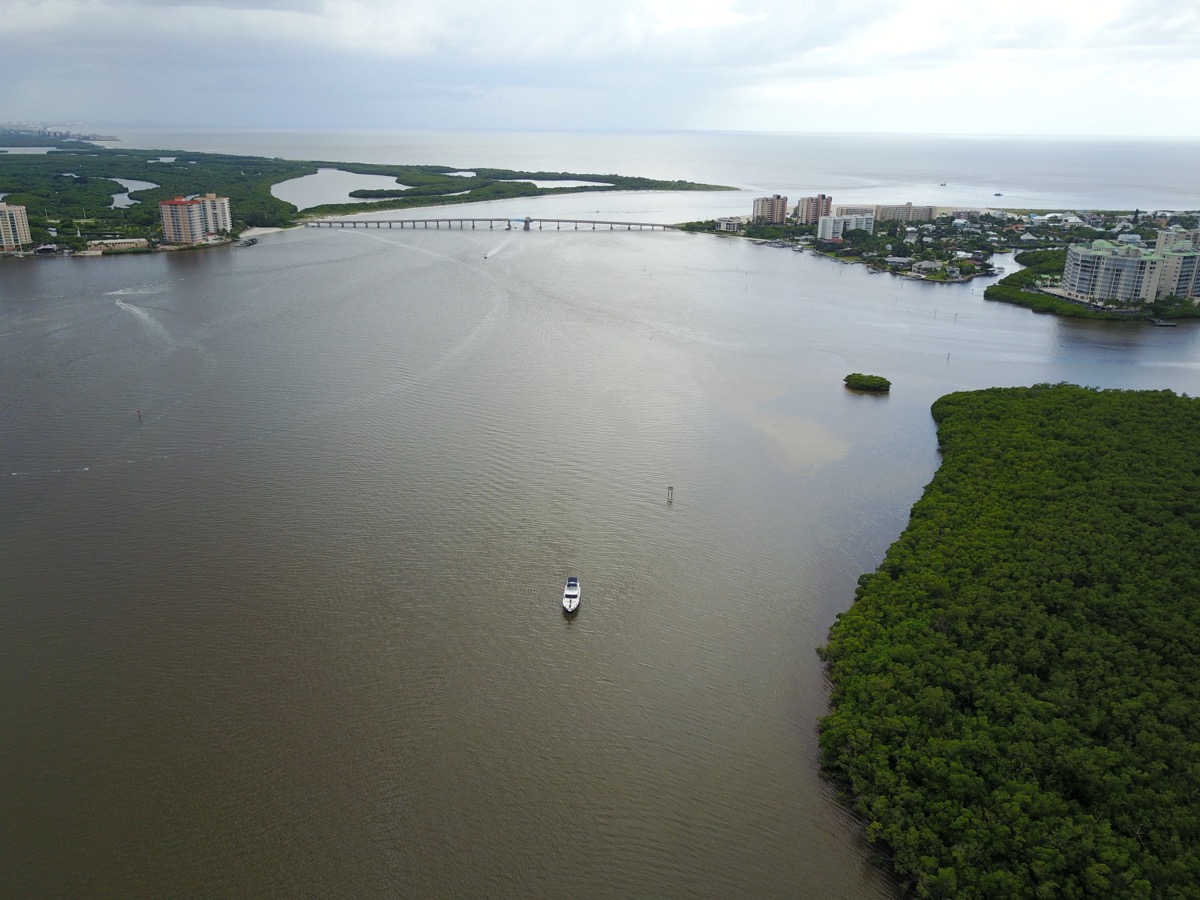
As a landlubber you might look at a body of water and think ‘ahhhh… nice big open water, you can boat anywhere!’.
Wrong.
Underneath the water is land and obstacles at varying depths. Some of those depths too shallow for your boat.
In such areas, like the entirety of the ICW we’ve been traveling so far, machinery periodically comes through and dredges a ditch to safe depths.
It’s somewhat narrow and in some locations you better stay within it.
And while it’s marked with essentially sign posts (channel markers), and the original ditch charted on navigational instruments – the road is far less visible than a land based road. Oh, and it can move after storms, strong currents, weather or just because it’s underwater.
And, as we found out last year, if one of those sign posts becomes damaged – you’ll be breaking out another ten thousand dollars if you hit it.
There’s a reason many boats prefer to avoid ‘driving the ditch’ when they can and go ‘outside’ (ie, out in the open ocean offshore). And it’s not just to pump their waste tanks overboard.
Laws & Regulations
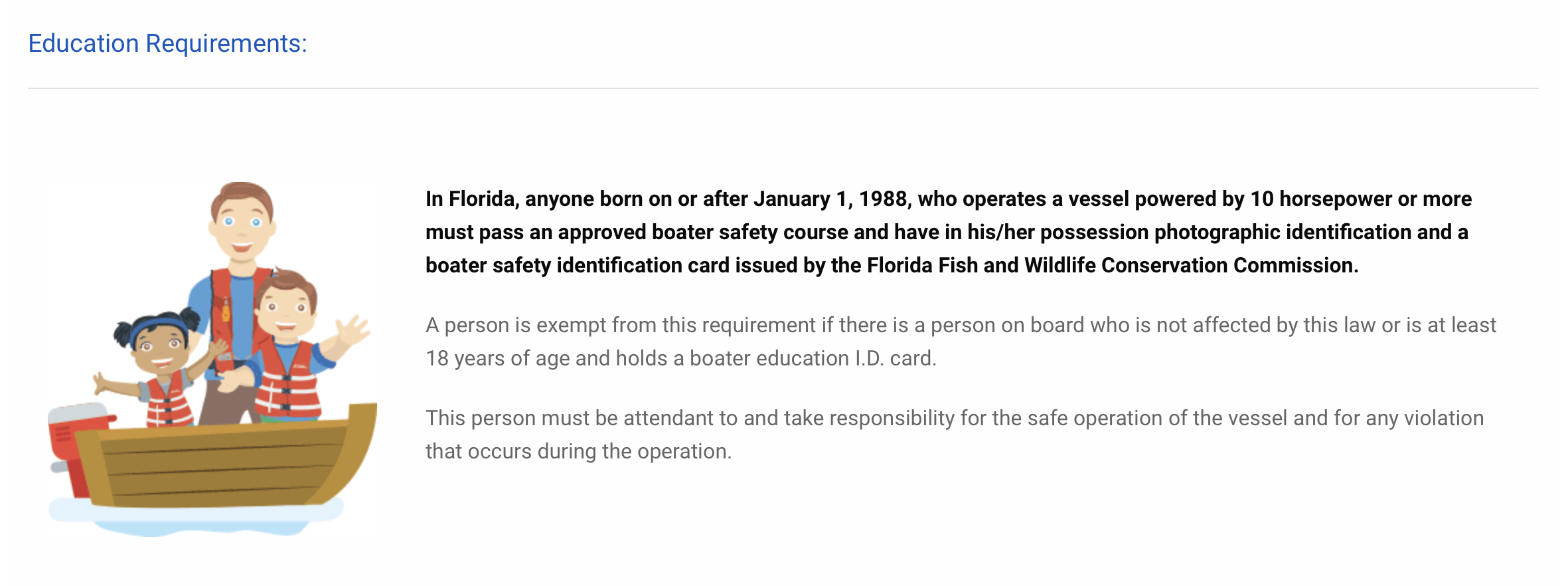
Boaters are subject to a plethora of laws and regulations. From the Coast Guard, state level, county and city. There are lengthy tomes that go over the ‘rules of the road’ that you’re expected to know.
And the Coast Guard in particular can board your boat at any time without probable cause to perform safety inspections. Any time. 24/7. At anchor. In a marina. Underway.
But you know what? There’s really not much required training or certification.
Yes, some states have requirements for the equivalent of a driver’s license. And some of them the requirements are pretty… umm…
Well, let’s put it this way – for me to get my Florida Boater’s card, which is only required for those born after 1987 (neither of us HAD to), I just had to take a free online course and pass it. There was no proctoring, no double checking I actually knew my stuff and no one taking me out to make sure I knew what the heck I’m doing.
It’s on you, the boat owner, to learn and acquire training to your comfort level.
And guess what, your comfort level may be very different than the boat you’re approaching. There’s a lot of untrained boat operators out there.
Motion Motion Motion
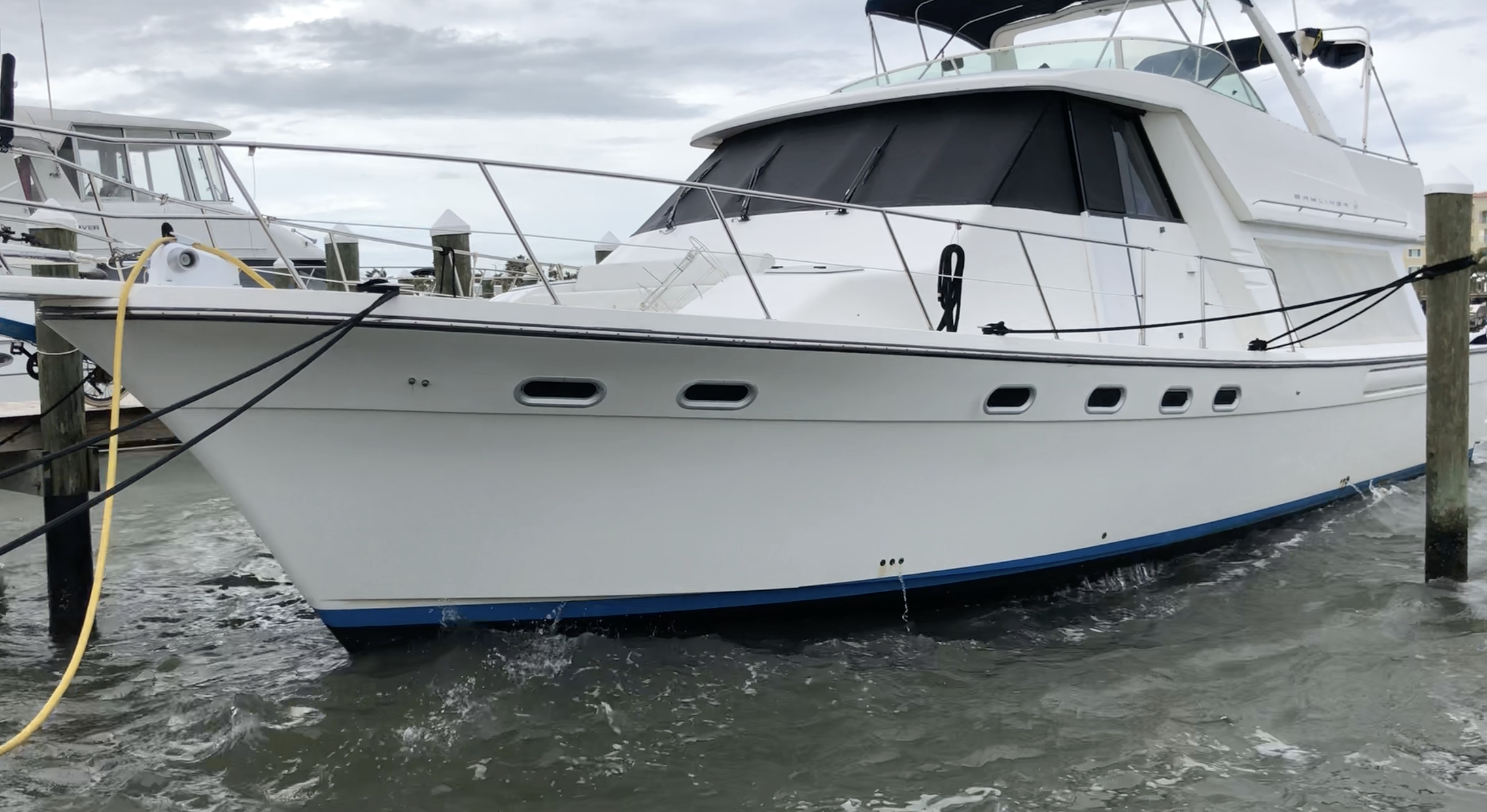
Your boat is on water. Water is fluid (duh). It makes perfect sense that motion would be a constant.
Even while docked, you’re not really still. A wave comes through, the wind pushes you around.
You are never still. Sometimes it’s just a nice gentle bob that we absolutely love.
And sometimes you’re having to hold on to something to walk down the hallway.
This means your boat is always ‘ship shape’ – things placed with the knowledge in mind that what is level could change by several degrees at any time.
The upside is, there’s less to secure for a cruising day – you’re already ready for motion!
No Shade
It’s perfectly logical that trees don’t normally grow in the middle of water – thus parking your boat under shade shouldn’t be expected.
When RVing, we love parking in the shade when we don’t need our solar panels.
Simple fact of the matter is, your boat is going to be exposed to full daylight all day long. This increases the heat and brightness.
And crazy enough, window awnings don’t seem to be all that common on boats (anyone know why? Seriously, we haven’t figured it out).
There are however covered slips at some marinas – so far we’ve only experienced those when we were boat shopping.
You at are the Mercy of the Weather
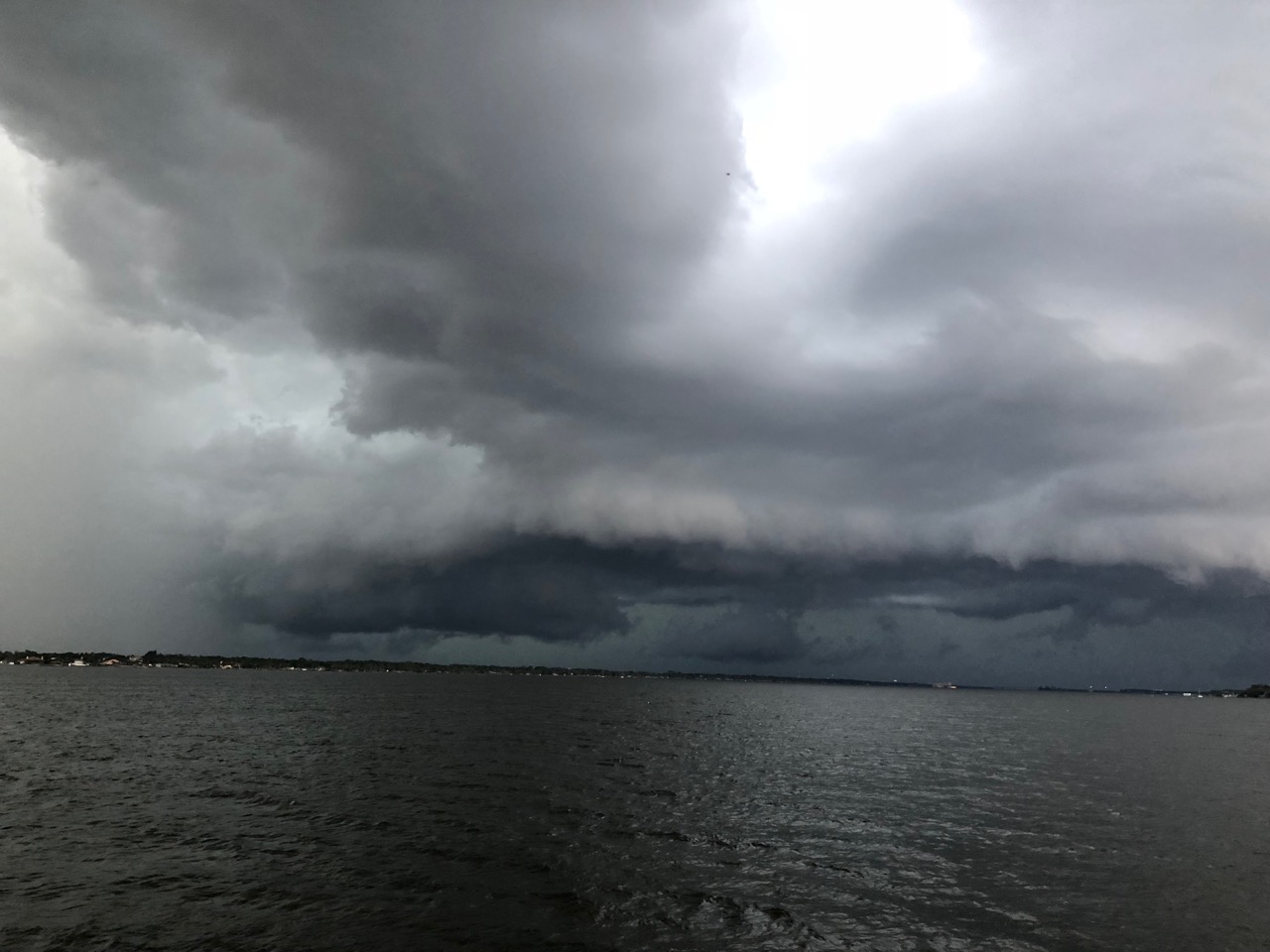
We used to think we were pretty good at tracking the weather while RVing. We paid attention and did our best to plan around it.
We were warned it’s another ball game on a boat – and boy howdy is it.
We’re constantly keeping an eye on wind speeds & direction, pop up storms, weather predictions to plan our cruising days.
With high winds and storms, come choppier water which makes for at best uncomfortable cruising (see above: Motion Motion Motion!), tricky docking and risk of your anchor dragging.
A string of bad weather can keep you pinned in to a location for a bit and disrupt plans and reservations (which is why having none is a good thing!).
We have several weather apps we use, we have onboard doppler radar and we have a daily routine for checking tropical storm predictions.
And tides! Tides impact if we’re pushing against a wall of water, or riding with it – which impacts cruising speeds and fuel consumption. And, tides also impact water depths and can determine if we can pass through shallow spots or under low bridges.
I’ve never felt this in tune with Mother Nature. Which is a good thing.
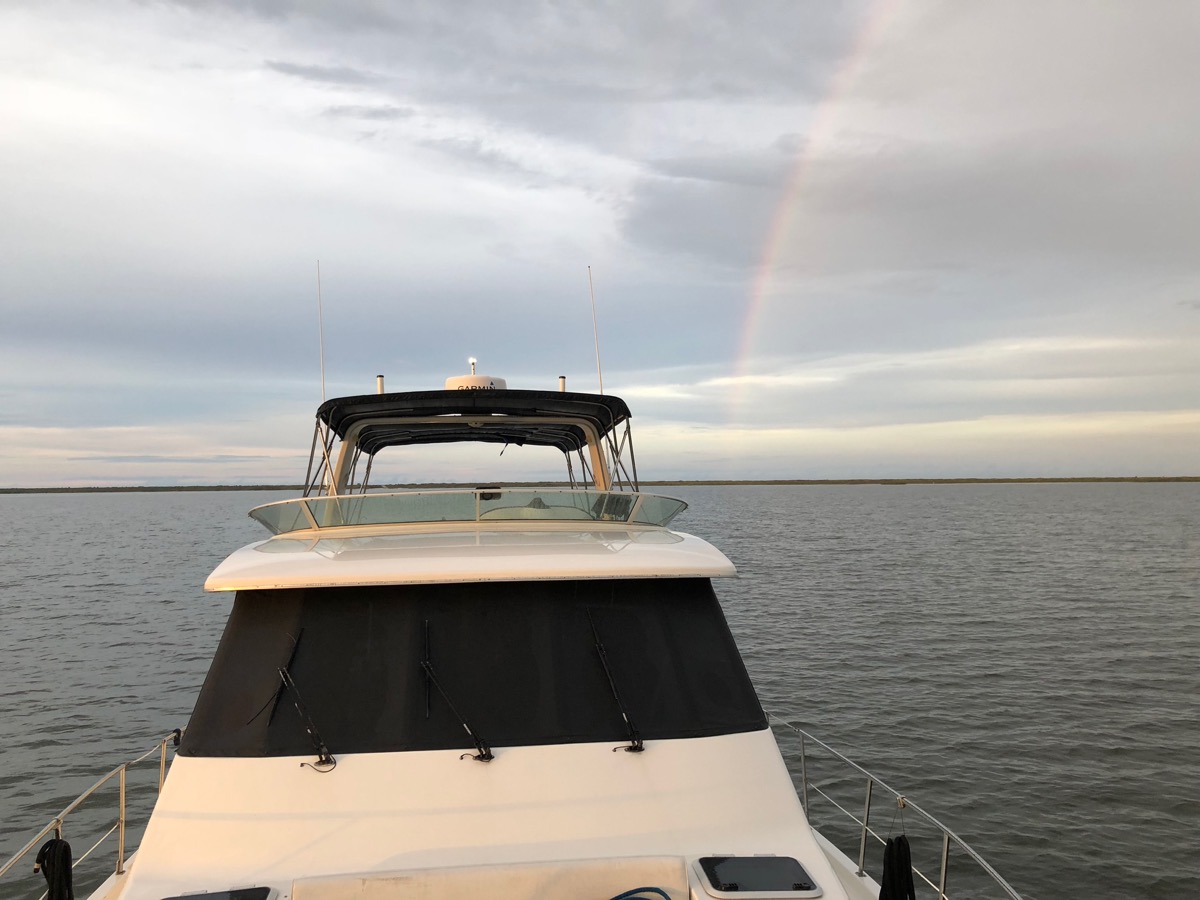
We’re only 18 months in, and still consider ourselves boating newbies. We have lots left to learn and experience.
We’re sure as we cruise in new waters there will continue to be new aspects that challenge us. We look forward to it!
So, these are the things that caught us most off guard about boat ownership. What have been your experiences?
Great blog. Curious about your fuel consumption on the Bayliner since we’re considering the purchase of one. What would you suspect your gallons per hour would be at around 8 knots? Thanks in advance, and keep up the good work. We currently live on a sailboat and want to switch to power for the Loop.
We seem to consume about 3.4 GPH with our cruising style (mostly at hull speed, but doing run-ups to planing to blow out the turbo.)
Pan pan pan…” for distress that is not immediately life threatening.
Many insurers give a discount for boating course, Power Squadron membership, Coast Guard Auxiliary membership.
FYI-Awesome from the Dollar store will strip your finish off the boat including paint. Do not use it on the outside surfaces! Unfortunately, we know this from experience. Moving our boat from west coast of Fla. to the east coast in a few weeks. Thanks for all the tips and info.
I am not a boater (just a recreational RVer) so was quite surprised to learn that you can dump sewage tanks directly into the ocean if you are far enough out. I sure hope that’s not the case for cruise ships too. I will add that knowledge to my fear of sharks and continue to sit on the beach and just watch the waves. LOL Really enjoy reading all your posts.
There are rules for boats over a certain size to have waste treatments plants onboard. The cruise ships we’ve been on claim that the waste water they create is nearly as clean as their fresh water supply. I’m not about to test that 🙂
But indeed, pleasure craft like ours can dump overboard. While logically the whole ‘dilution is the solution’ theory makes sense – my mind has trouble with it too. Some cruising blogs we follow have solid arguments that treating waste on land is more harmful to the environment then dumping out into the vast ocean in smaller quantities at a time.
I have found no matter what sort of recreational equipment you use from skis to big boats and RVs, one hour of use will always lead to one hour of work on the item. Usually the use is hard and the need for low weight makes the builds less durable than say a railroad tie. From your blog posts I can see you are enjoying more than not. Since retiring and hitting the road full time, my motto is that “I have nowhere to go, and all day to get there”
Oh gosh.. we sure hope one hour of use doesn’t turn into one hour of work. Hasn’t been our experience by a long shot. Thankfully, living in our bus or boat has a very sustainable balance of fun/life hours to maintenance.
Love boating!
There is a learning curve. One hand for you and one for the boat. When getting on and off, going up and down steps and especially moving around on the boat during rough passages. It pays to learn how to move on the boat. There are times I’ve scooted on my butt from the bridge down to the salon and had to hold on from the salon through the galley to the head. Pulling up your pants one handed is trickier than it seems. LOL
When we travel by boat; there are places we can’t go! Sad, but true. Thin water or dockage that won’t accommodate us means that some places are off limits. And it’s a lot easier to navigate unknown places on the road than it is in a boat. (Although I did have to back up my 24′ travel trailer waaaay too far when I turned onto a dead end once. Not fun)
Boating involves a lot of planning. Which side you are going to dock on, stern or bow in? Where will you reprovision, pump out, Is it going to rain? Canvas up? Canvas down? Where will you store everything on the boat? Where will you do laundry? Where is the next fuel stop? How much water have we used? When you grocery shop; will it all fit? Do we have Beer?
And guests….love them. But, they need to learn about boating too. No shoes onboard, (our parking lot leaves an awful blacktop trail on our carpet). They need to learn about how to use your head. When they bring something to “potluck”, they need to know that whopper size tupperware bowl is just not going to fit in our fridge. And when they come spend the night or weekend; they have to learn that a rolling suitcase just isn’t going to fit.
This is our last weekend on the boat. We haulout on Monday for the winter. And that is a whole other story about getting your boat ready for 0 degrees.
Enjoy!
Thanks for sharing your lessons learned, Marie! Zero degrees? Brrrrr. We’ll be dealing with that ourselves as we move north. Cheers to the next season’s adventures.