
If you were hanging around our little corner of the web this time last year, then you might remember we had a few little BUNCH of modifications made to our bus.
One of the projects we tackled was downsizing from a 7500 watt diesel generator to a 2500 watt propane powered one.
We had a lot of questions on why we selected this path, and if 2500W would really be enough to serve our needs. We put off answering all the questions at the time, promising to share our deeper thinking on the topic later.
After nearly a year of enjoying this setup, it’s time to share why we did it – and how it’s been working out.
We turned on the camera for a few minutes and recorded a quick video to show you how all the electrons flow for us.
And below the video, is the text version with even more geeky details.
Why The Decision to Downsize?
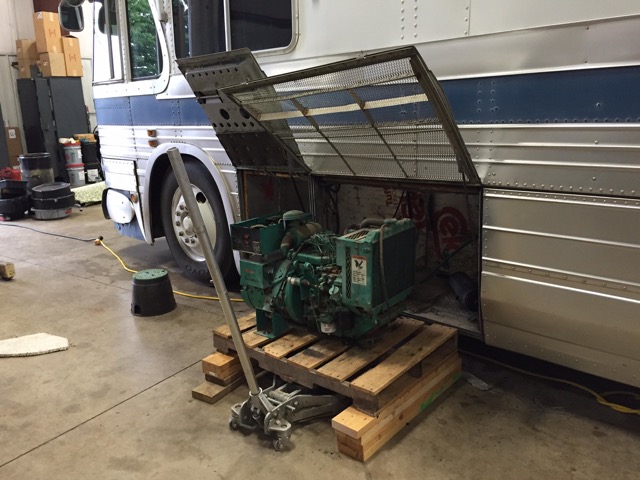
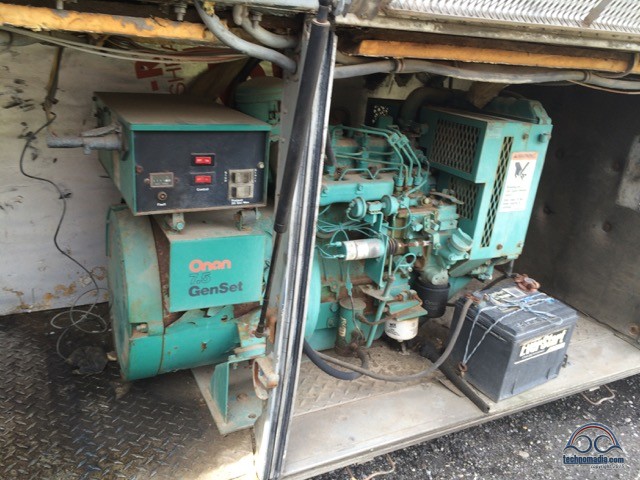
When we bought our bus conversion five years ago, it came with a vintage 1980’s 7500 watt Onan diesel generator that had just over 200 hours on it.
Despite the remarkable low hours, the old beast of a generator was in serious need of an overhaul. And though it did work, it had never been properly setup to be sound proofed for RV installation – making it horrendously loud in use.
It was also WAY overpowered for our needs.
We’re just not generator people’ – so investing in an overhaul and proper soundproofing always remained low on our priority list.
When we’re off grid, we prefer to attempt subsisting entirely off solar – and we only resort to a generator after prolonged spells of cloudy weather.
Or we’ll use the generator for an hour or two when it just becomes too unbearably hot and we need to run an AC for longer than the few hours our lithium batteries & solar alone will allow.
And if it’s hot enough to need prolonged use of air conditioning for days on end, then in our experience it’s time to find some proper electrical hook-ups anyway.
But we do consider a generator a prudent component of an RV electrical system designed to do lots of dry camping.
When you need one, you need one.
Our options were:
- Overhaul & sound proof the old 7500W generator, which would easily cost over a grand and would still leave us with a bigger and louder and older generator than we’d like.
- Replace the generator with something somewhat smaller, more modern, and a LOT quieter in the same bay. But a new diesel generator is very expensive, and our limited intended usage made this path seem like overkill.
- Or pursue a little unconventional idea we had in the back our minds…
That idea was to rethink everything about how the generator on our bus was set up – including even where it was located!
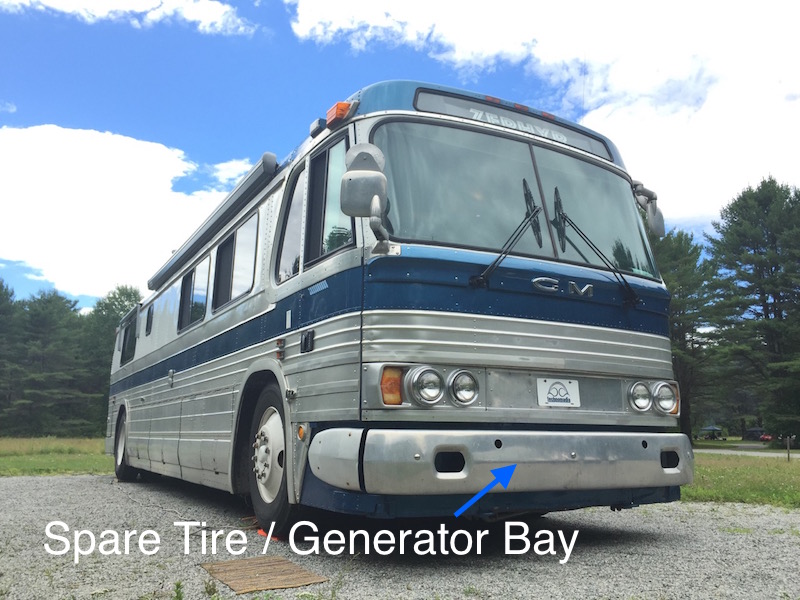
The plan we had in mind was to ditch our rotted spare tire that sat in a hidden and hard-to-access compartment behind the front bumper, repurposing this space as a new generator bay.
This would then free up the old nicely ventilated generator bay to be extra storage – making a perfect chamber for the propane cylinders to run our hydronics system, storing leveling blocks, and other outdoor stuff.
Wait, But Don’t You NEED a Spare Tire?
First, there is no requirement to carry a spare tire, and many vehicles these days don’t come with one. Sure, it’s advisable and can make things a lot less complicated if you needed a replacement in a pinch. Especially if you have hard to come by tires.

Our thought process weighing if we were willing to ditch the option of carrying a spare went like this:
- We don’t drive that many miles a year
- We take super good care of our tires (see The RV Geeks Videos/Articles on Tire Care)
- We use fairly standard truck tires that are easier to track down than more rare RV tires
- We know how to patch a flat
- We’re budgeting to replace our tires every 5-6 years
- Odds are that any spare would age out before it ever had a chance to be used
- We do regular tire inspections, both ourselves and at each regular professional service
- We have dual-tires on the rear, if one of them went out – we may very well still be able to travel (albeit slowly) to make it to a safe stop or tire shop
- We run a Tire Pressure Monitoring System (after trying several over the years, the EEZTire Pressure Monitoring System is by far our favorite – we plan a review soon)
Basically, we feel our risks of actually needing to change a tire in a dire situation to be lower than average. Sure, stuff can happen. No one is exempt.
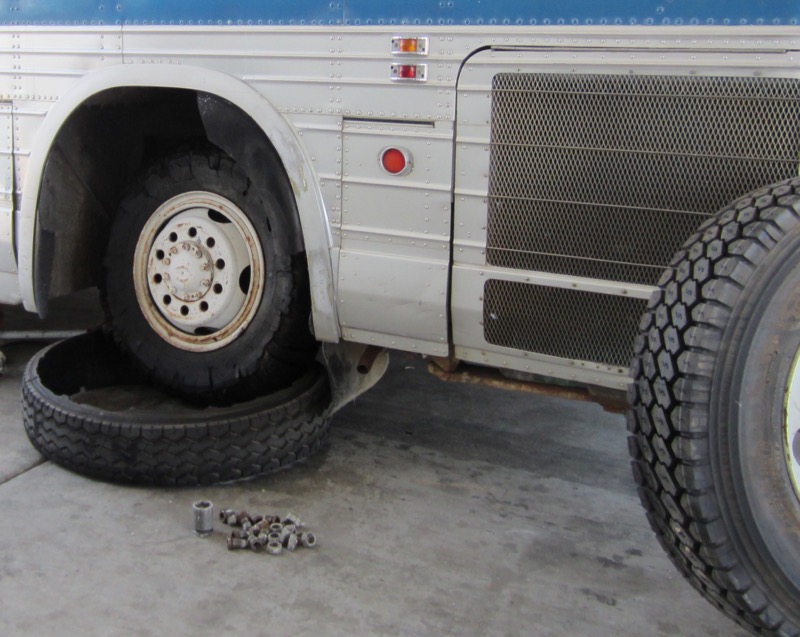
We also have different tire types for our steer and drive tires (we put on heavy tread on the rear for better off road ability.)
We can only realistically carry one spare with us, so which type do we carry? Whichever we selected, we’d probably guess wrong.
And if we ever needed to change the tire on the side of the road, we certainly don’t have the heavy duty air driven tools on board to do it ourselves easily.
We’d be calling on our roadside assistance anyway (we use Coach-Net).
And Coach-Net can locate and bring us a tire at our cost (probably at highway robbery rates). If they can’t find a tire, we’re resourceful and can figure it out.
We did our analysis, and we’re good with the potential extra costs and complications for the rewards of extra storage space.
Do we recommend this for anyone else? Heck no. You’ll have to weigh your own risks & tolerances.
Why a 2500 Watt Generator – Is it Really Enough? And why Propane??
The search was on to find what could realistically fit in the new bay. It’s a much smaller space with tight constraints, especially vertically.
Options for smaller diesel generators (our preferred fuel source since the bus already runs diesel) were very slim-to-none. Diesel generators are also pretty expensive.
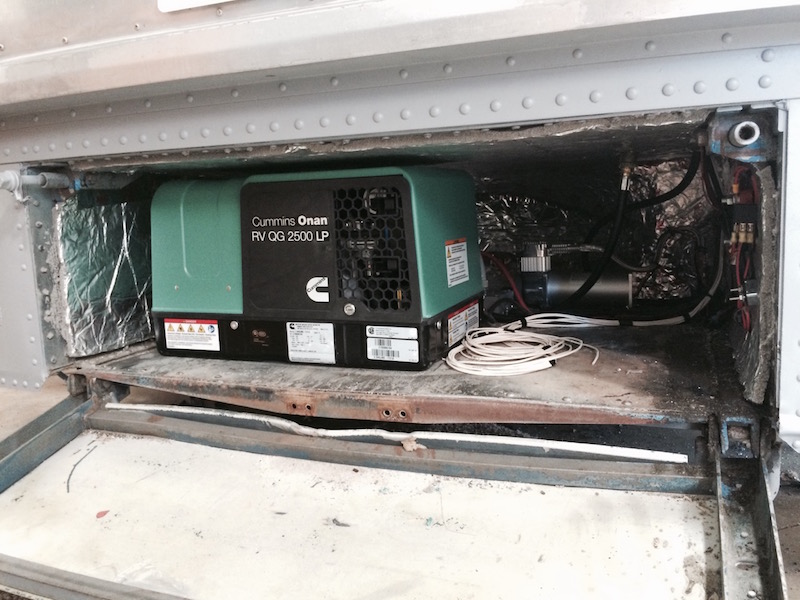
The smallest Onan QG generator however fit our available dimensions, and was available in a gas or propane model.
We were already planning on installing the Precision Temp Jr. Hydronic system for our bus heat, water heating and engine pre-heating – which runs on propane (we were propane free up until then).
The propane generator option was then an obvious choice so we wouldn’t need to add yet another fuel source.
Priced at $2600 (plus other various parts), it was relatively affordable. Especially since we were able to sell the old diesel generator for $750.
But the propane version was only 2500W, would it be enough?
Many RV generators are sized to run EVERYTHING onboard, including starting all of the installed air conditioners… at the same time.
A single rooftop RV AC typically draws 1400-1800W while the compressor is on, but it actually has a very brief momentary surge where it requires substantially more power to get initially started.
Onan warns about this in their brochure on sizing RV generator systems:
“Air conditioners, like all electric motors, can draw up to three times more power during the first few seconds of start up than during normal operation. While this is common for all electric motors, it is especially true for air conditioners if the compressor tries to start against built-up high pressure in its refrigeration system.”
Thus without other special tech on board, most RVs do need a large generator to start an AC.
But after that initial surge – an RV generator is often left running inefficiently at less than half its rated capacity.
So why not get a generator sized for the average load, not the max load?
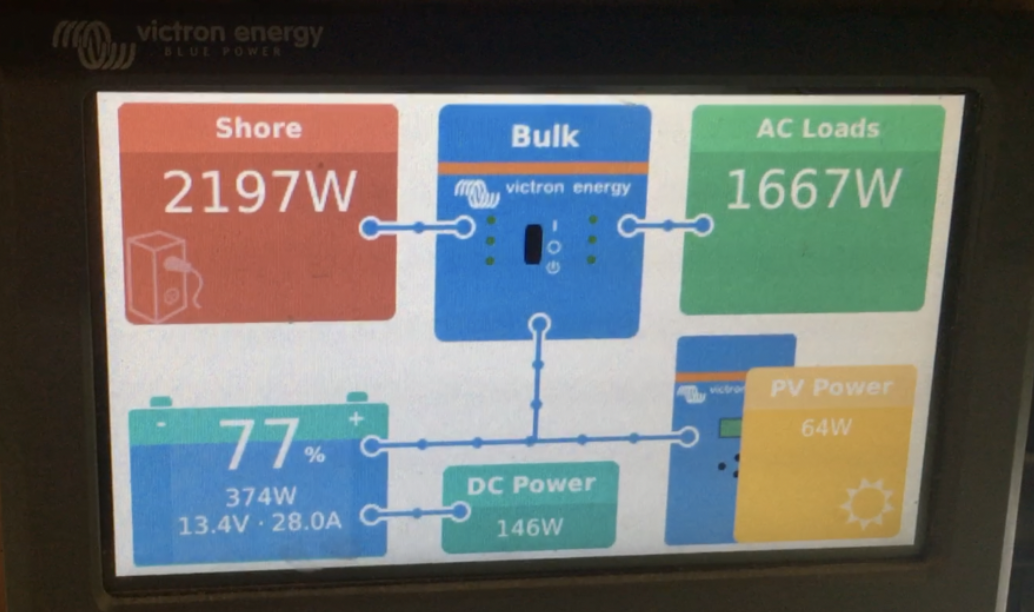
In our case, we could already start and run an AC off our 3000W boosting inverter and 500AH lithium battery bank.
And with our well insulated bus, running one air conditioner is usually plenty for us, and we rarely desire to run both the front and rear AC at the same time.
Our solar and battery system was also already keeping us off-grid without generator use for weeks at a time.
A generator in our setup is an occasional supplement, not a primary means of energy generation.
Our goal with our new generator would be to allow AC use beyond our battery & solar capacity. Or to top up the batteries after multiple cloudy days, or while parked in shaded locations.
Ideally, we would have liked a 3000-4000W generator. This would allow us to run a single AC and charge the batteries at full capacity at the same time. Our current inverter setup can charge with 100-120 amps of DC power at a time, and our lithium batteries can take whatever we throw at it – so this would be an ideal target generator size.
But at 2500W, we’d have just enough to run an AC with some spare to slowly charge the batteries at the same time.
It was a compromise, but one we were happy with.
And it all fit in the tiny little bay up under the bumper!
Here are some past posts where we’ve talked before about the individual components of our electrical setup:
- Lithium Batteries (500AH at 12v)
- Boosting Hybrid Inverter (Victron MultiPlus 12/3000VA)
- Solar Setup (800W on the roof, 600W ground deploy)
This post also nicely compliments a similar post we made recently on Running an RV AC off Solar, Batteries, and a Hybrid Boosting Inverter – which goes into more details on the boosting technology and solar.
Viair Air Compressor
You might notice a little shiny silver gizmo to the right of the new generator.
That’s also a new edition – a Viair 450C air compressor.
 We primarily use this to air up our bus before hitting the road. Previously we had to let the air compressor on the engine do that, which can take several minutes.
We prefer to be kind to our neighbors and minimize how much noise we make, so the integrated air compressor has been wonderful. It’s made packing-up day much more of a breeze.
We just flip it on when we start getting ready to roll, and by the time we have things packed up (usually about 15 minutes to secure everything and do a pre-trip inspection) the bus is aired up. We just fire up the engine, and we can roll away with our air bags and brakes at safe levels.
It’s also come in handy for when our bus settles unlevel as air leaks out of the system. It’s like a reset button for us (we have no other leveling system but boards.)
How Has it Been Working Out?
Well, true to our usage patterns – we’re just now getting close to our 20 hour break in for our first oil change & maintenance. And a lot of that usage is running the generator once every month just because it’s recommended to exercise it.
We’ve done a lot of off-grid camping since the bus renovations last summer, and the balance has been fabulous. We’ve tied the generator into our Victron inverter & control panel setup – which allows us to remote start it from our smartphones, set a timer for run time, and other nifty features.
These past couple of weeks we’ve done a fair amount of dry camping around the northeast where temperatures have been a bit toasty, and camp spots tend to be more shaded (less solar!).
The generator has come in super handy to run for a bit to cool off and top up the batteries during the hottest afternoons.
We still need to do some tweaking to better sound proof the new generator, as it’s supposed to be much quieter. But we’ll get there!
All and all, we’re happy with the setup and improvements to our RVing lifestyle, and consider it another win for our flexible electrical system setup.
More Bus Project Posts:
Summer 2015 Bus Renovations Tour & Project List
Our Bus Tour Page (with all our posts about the bus linked)
Bus Renovations: How We Added 5 Feet to Our RV — Without Adding Slides
Bus Renovations: A Cat’s Purrrfect RV Litter Box
Is It Worthwhile to Renovate an Old RV? Why Not Just Buy New?

Hi Chris and Cherie, I like the spaciousness of your bus. Does your CCGX panel also have coil whine when reducing the brightness?
Our CCGX is pretty much silent unless you press an ear right up against it. We keep the brightness dialed way down, and I wish it could go down even further at night – automatically if possible.
We thought about the same Viair 450 compressor. But hesitated because our tires require 120 PSI and from the information we were told, you need to have a minimum of 105 to get it to inflate? Can you inflate your tires with the unit if they are less 110 or 115 to start with?
We’re actually not using the Viair for our tires, it’s integrated into our air suspension system so that we can fill it without needing to turn the engine on. We inflate our tires off the air compressor built into our engine (and our tires only get inflated to about 95 based on our tire specs and weight.)
Just found your post love that you have a beautiful old bus. My husband and I just bought a 1957 GMC we are having trouble finding insurance do you have any advice?
Find a good agent 🙂
I got a flat the other day back on a forest road. It was a pretty good gash. My tire inflater with slime patched me up well enough to get out of there, and it was a lot less hassle than changing a tire. That said, I think I’d like a full spare for the backcountry, but if, like you, I was always on proper roads, I wouldn’t bother.
Love this electrical distribution scheme! Fantastic! As a Farkle Nut, I love Over The Top electrical projects like this….Congratulations. (BTW…A soft start capacitor is the balls on these AC units. I just installed one on my Travel Trailer and now I can run the AC on one Honda EU2000i)
One question, your monitor shows 13+ volts in your batteries but at only 77% charged? In my system at 75% charged i’m down around 12.8 volts (TriMetric with two group 31 12v batteries / 280w solar)
We’re running lithium 🙂
Good for you guys for thinking outside the box and I really appreciate the detailed write-up. I also agree about the spare. We carry one, but both times we got a flat we were not in a situation where we could change it ourselves and had to use our roadside assistance anyways. The only time I could see this being a problem would be if you were in a place where there was no tire to be found and had to wait for one to be shipped but since you live a life with that kind of flexibility that is a chance you can take. Thanks again for the post.
There are definitely times that having your own spare could make a situation go smoother. But exactly, we have a flexible life, and always have our house with us.
Oh…. and forgot to mention… RVs, especially large ones, don’t generally come with spares for many of the reasons you mentioned, and we’d never be able to change one without Coach-Net help anyway. We’ve never had one in 13+ years on the road and, as you said, it would have just aged out with the others. And in our case, with the cost of large, RV-specific tires being so high, that would really be a waste. Thanks again for a great post.
Ahh.. good to know there are motorhomes coming off the line without spares too. Definitely when our bus was in service it could be more important,
Your writing is always so thorough and informative, and a great compliment/addition to your related videos, and this article is no exception. And we’re not just saying that because you mentioned us (but thanks so much for that… we’re honored). You two have put together such great systems, it’s a real inspiration for others looking to optimize and integrate their equipment better than the typical RV. Thanks for another excellent, informative installment! Miss you both and hope you’re having a great summer in the land of my birth (upstate NY). 🙂
Aww.. thanks guys. Hard to believe it was a year ago we were together in Vancouver. Miss you guys too, and can’t wait until our paths cross again.
no Victron boosting inverter here, but we did get the Viair compressor… best 12V compressor ever… we envy the reports about 40 degrees at night!
We haven’t used others to compare, but it certainly hasn’t let us down and works exactly as expected.
I love your explanation and honestly your Victron color controller is the easiest thing I’ve seen to explain all the geeky electrical stuff I don’t even understand. Watching that definitely gave a better picture of what is happening. So cool!!!!
We really do love the Victron CCGX’s display. The picked our brains on UI for it, and I kept telling them they had to make it so simple even I could understand it! 🙂
Sounds like you built a power system for your bus to fits your needs precisely. Love reading & hearing about how you have applied technology – especially now that we have just acquired a 2005 Winnebago that came with a 1500w GoPower inverter and 450w+ of a rooftop solar system that has to be made workable.(the prior owner took all the old batteries out!).
Everything you have done on your bus makes a lot of sense, and your LP generator seems like a nice complement. Enjoy New England!
Enjoy your new wheels and setup! Sounds like a great starting place for an electrical system.